
The previously unimaginable has become routine. Events that once defined tail risk now occur with unsettling frequency, challenging the foundations of traditional risk management. Yet, many financial institutions continue to rely on traditional risk models built on historical data and stable correlations – tools fundamentally ill-suited for a world defined by structural breaks and nonlinear dynamics.
As practitioners often observe, “statistics won’t help you imagine what has never happened before.” This realization has led to a growing emphasis on creativity in stress testing. However, imagination alone is insufficient.
The challenge is not simply to envision extreme events, but to uncover how risks interact, amplify, and cascade across the financial system.
Today’s risk landscape is shaped by several distinct forces: rising oil prices and potential inflation; unfolding private credit crisis that could spread across other asset segments; and valuations of AI companies increasingly detached from fundamentals.
These risks can interact, especially when combined with other market trends. Tokenization growth increases behavioral volatility through panic selling. Senior CLO tranches, widely held by regulated institutions, could become a source of systemic liquidity stress if these securities are downgraded into high-yield territory, triggering need for capital across the board. This can happen just due to a shift in correlations in the collateral pool. Common in stressed environments, this can flatten the loss distribution shape.
Alla Gil
The next crisis will likely arise from interactions – second- and third-order effects that propagate across markets, institutions, and investor behavior.
While many institutions now incorporate oil shocks and private credit stress into their risk frameworks, this is often insufficient to capture true idiosyncratic vulnerability. The critical issue lies in modeling how these shocks interact – reinforcing one another and propagating through specific exposures via cascading effects.
The challenge is not a lack of imagination - it is the absence of systematic exploration.
Hidden Vulnerabilities
Exhaustive reverse scenario analysis helps uncover hidden vulnerabilities by explicitly modeling feedback loops across asset classes and incorporating behavioral responses under stress. It also helps to develop robust early warning indicators, clearly defined trigger points, and proactive mitigation plans.
The first step in this process is to generate the full range of scenarios, encompassing historical and hypothetical shocks and incorporating their knock-on effect across all relevant variables.
The next step is to link these scenarios to institutional performance (i.e., its balance sheet segments) using explainable ML techniques such as regression with regularization.
Finally, key metrics - including capital ratios, liquidity measures, and profitability - can be derived dynamically at each step across all scenarios.
Institutions that implement this framework gain the ability to assess potential impacts in advance, design proactive response strategies in the form of lending and investment decisions, pricing, and managing liquidity buffers; and prepare adequately for potential prolonged disruption.
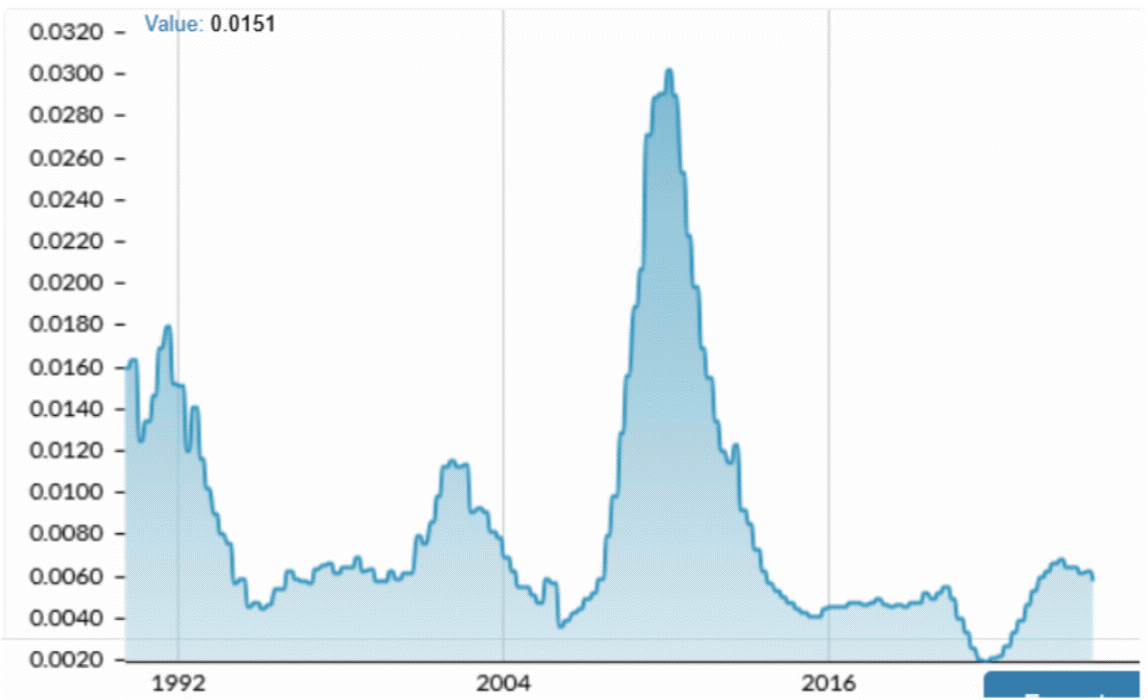
To illustrate this approach, let’s consider the charge-off rates on all loans at U.S. commercial banks, with historical time series presented in Figure 1.
Figure 1. Charge-Off Rate on All Loans, All Commercial Banks
Source: Federal Reserve Economic Database
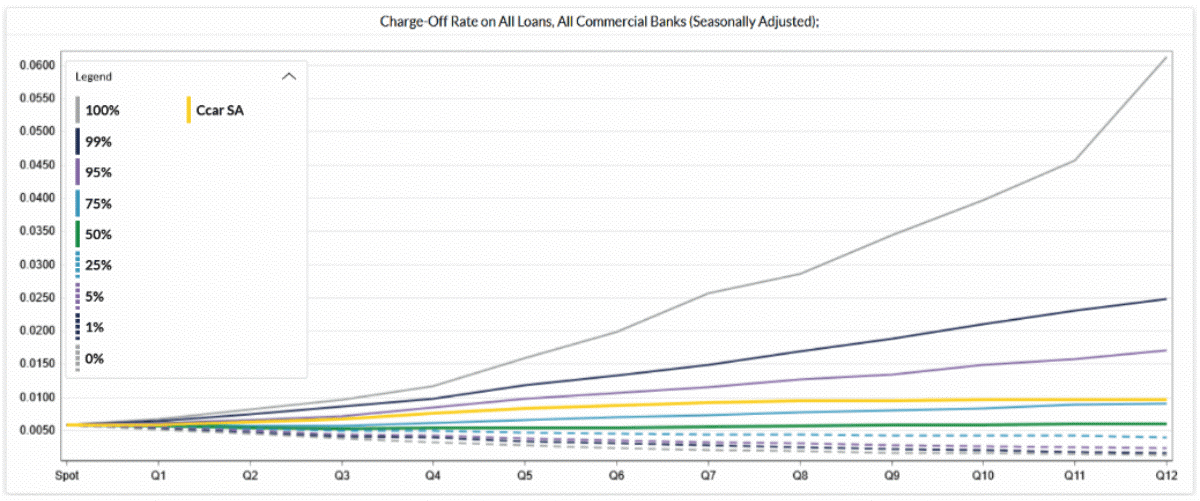
When this indicator is projected on the full range of forward-looking scenarios, the resulting distribution of outcomes is fairly wide (Figure 2). It captures the worst-case outcome of the Global Financial Crisis (GFC) with the probability of a bit less than 1%, while 99.9th-worst-case percentile shows that the charge-off rates might even reach 5%. And some experts already warned that the new crisis might be even more severe than GFC.
When CCAR Severely Adverse (SA) scenario expansion is plugged in (yellow line in Figure 2), it shows losses just above 75th worst-case percentile and way below the 95th percentile.
Figure 2. Distribution of Projected Loans’ Charge-Off Rate Over 12-Quarter Horizon
Source: Straterix
This reinforces a critical point: Regulatory stress scenarios may not fully capture the most severe drivers of credit deterioration, as they are focused on systemic capital and liquidity adequacy and ability to withstand stress.
Adding “imagination-driven” scenario, featuring simultaneously rising oil prices and widening credit spreads, and expanding it on other variables, we can see where both CCAR SA and Oil-Private Credit Crisis (Oil-PrCrd) scenarios belong from a KPI distribution perspective.
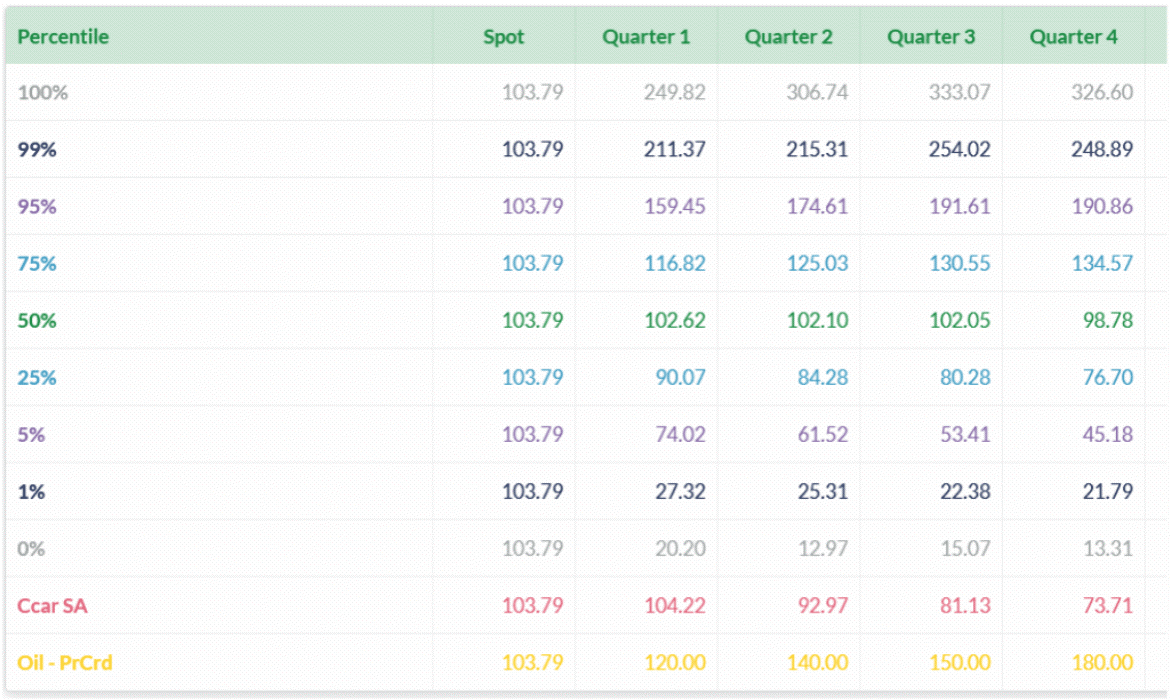
Figure 3.1 shows the implied values of CCAR SA oil prices. As this scenario represents a severe recession, oil prices go down over time (red-colored row). This can be shown over the entire 12-quarter horizon, but “imagination driven” scenario tends to be shorter term as it’s based on the current market conditions. Oil prices are specified in this scenario and take values of $120, $140, $150 and $180 per barrel respectively over four quarters (yellow-colored row).
Figure 3.1. Distribution of Oil Prices from the Full-Range Scenarios Together with CCAR SA and Oil-Private Credit Scenarios
Source: Straterix
We can see from Figure 3.1 that CCAR SA oil prices trend below expected level for three quarters and even go slightly below 25th percentile in Q4.
As for the custom designed Oil – Private Credit scenario, oil prices go above 75th percentile already in Q2 and approach 90th percentile by Q4.
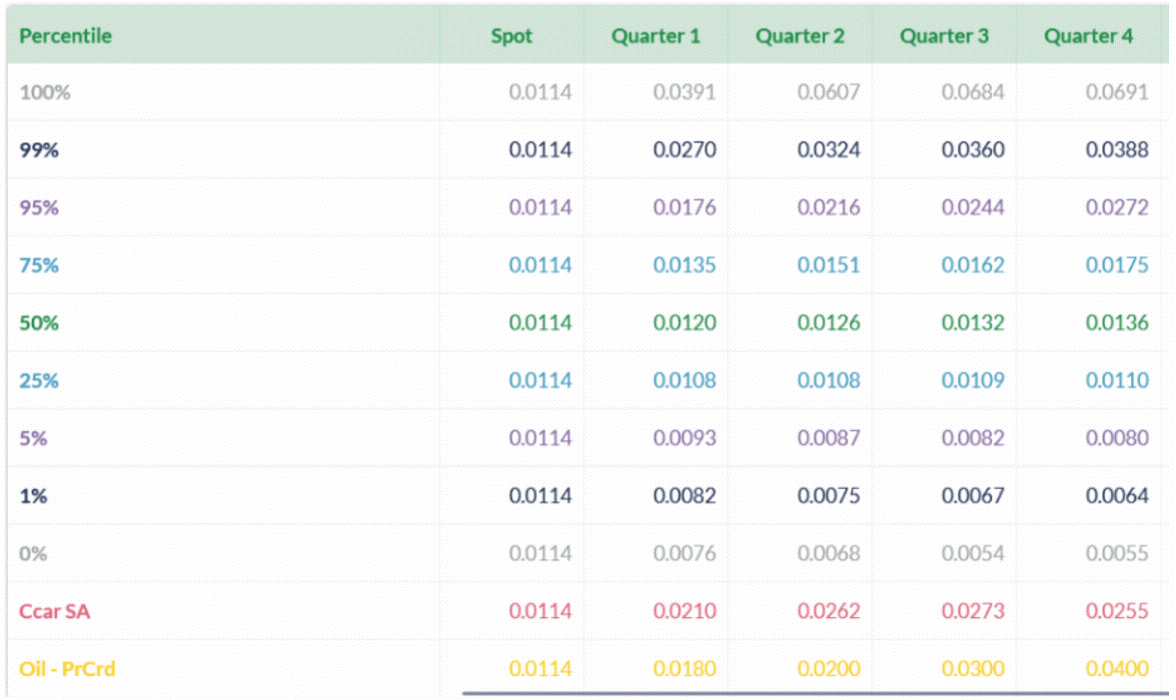
The implied behavior of credit spreads is depicted in Figure 3.2.. Expanded value of BBB-rated credit spread on CCAR SA scenario approximately doubles and trends between 95th and 99th percentiles, going slightly below 95th percentile by Q4.
In the custom-designed scenario, these values are given, and they hover in the upper range of the same interval (95-99 percentiles) going above 99th percentile by Q4.
Figure 3.2. Distribution of BBB-rated Credit Spread from the Full-Range Scenarios Together with CCAR SA and Oil-Private Credit Scenarios
Source: Straterix
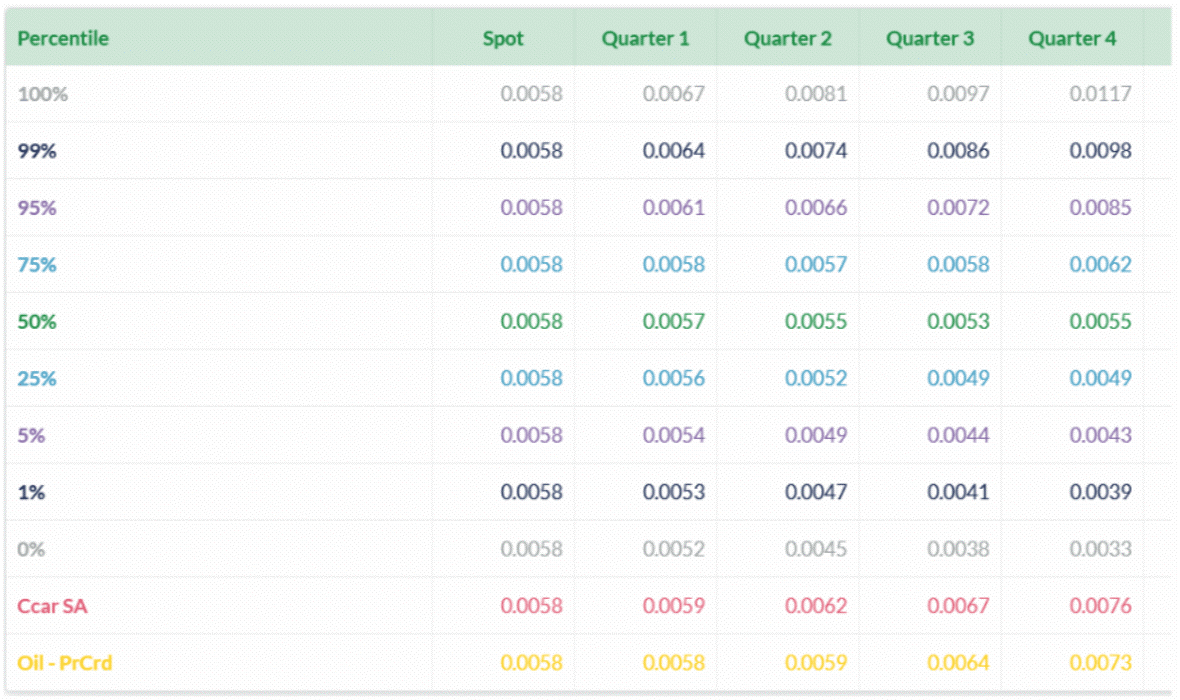
But when we look at the considered KPI outcomes on all these scenarios (automatically generated the full-range of scenarios, regulatory CCAR SA, as well as custom-built ones), both specified scenarios give similar results that are not dramatically stressed – see Figure 3.3.
The charge-off rates on generic loans are hovering between the 75th and 85th percentile of losses and very close between these two scenarios.
Figure 3.3. Distribution of Charge-Off Rates from the Full-Range Scenarios Together with CCAR SA and Oil-Private Credit Scenarios
Source: Straterix
Given that neither CCAR SA nor custom scenarios deliver the 99th percentile type of losses, let’s apply exhaustive reverse scenario analysis and discover scenarios leading to the highest loans’ charge-offs.
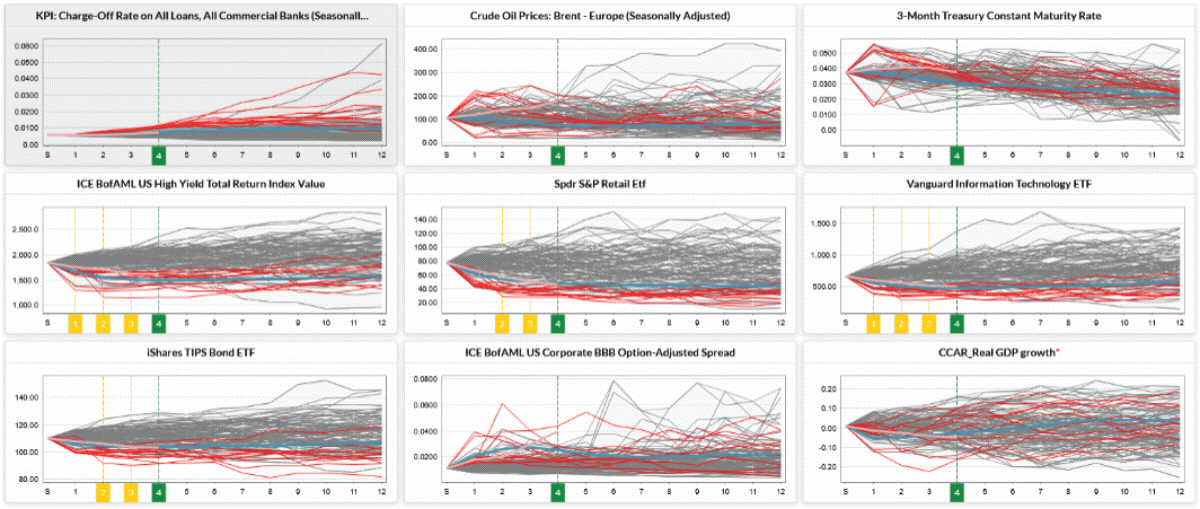
Figure 4.1 depicts a few variables that are correlated with the highest levels of charge-offs in Q4. Grey lines are all generated scenarios, the red ones lead to the 99th worst-case percentile in Q4, and blue and pink lines respectively represent CCAR Severely Adverse and manually designed oil crisis/private credit scenarios.
Yellow buckets highlight the time points when these correlations increase, thus making these variables – retail, technology, high-yield total return, and TIPS ETF – good early warning indicators. This picture highlights the nonlinear interaction between macro and financial variables and their cascading effects: higher energy costs feed inflation, tighter financial conditions constrain refinancing, and widening spreads accelerate credit stress across leveraged borrowers causing across-the-board downgrades and liquidity drought. Then the snowball keeps rolling.
Figure 4.1
Source: Straterix
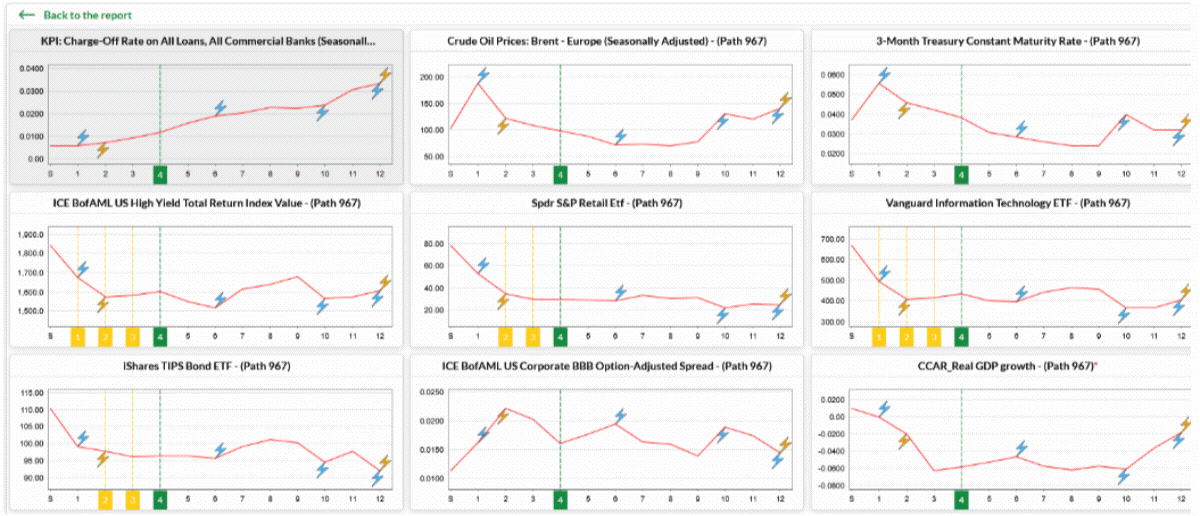
Figure 4.2 shows the drilldown into a single representative scenario where the blue lightning signals a historical shock and the orange a medium-size hypothetical one.
Figure 4.2
Source: Straterix
These shocks can work as the triggers of contingency plans, while early warning indicators might be used for effective and (still) inexpensive out-of-the-money hedging strategies.
Parting Thoughts
The next crisis will emerge from interacting vulnerabilities rather than a single source. Modern market structures, including tokenization and retail participation, amplify herding and accelerate the shift from localized stress to systemic risk.
For risk managers, the priority is not predicting triggers but understanding how risks combine and propagate. This requires pairing imagination with systematic, quantitative exploration, enabling institutions to anticipate conditions, improve decisions, and avoid reactive, procyclical responses under stress.
Alla Gil is co-founder and CEO of Straterix, which provides unique scenario tools for strategic planning and risk management. Prior to forming Straterix, Gil was the global head of Strategic Advisory at Goldman Sachs, Citigroup, and Nomura, where she advised financial institutions and corporations on stress testing, economic capital, ALM, long-term risk projections and optimal capital allocation.