Event
GARP 2026 Climate and Nature Risk Symposium
Climate Reality Check: from Risk to Resilience
9-10 June 2026 | Day One: 8:00 - 19:00 | Day Two: 8:00 - 14:00 | London, UK
Details
June 9, 2026, 8:00 AM - June 10, 2026, 1:30 PM
In-Person
Etc.Venues Fenchurch Street
8 Fenchurch Pl, London EC3M 4PB
Contact
Questions can be directed to the
GARP Events team.
Share
Overview
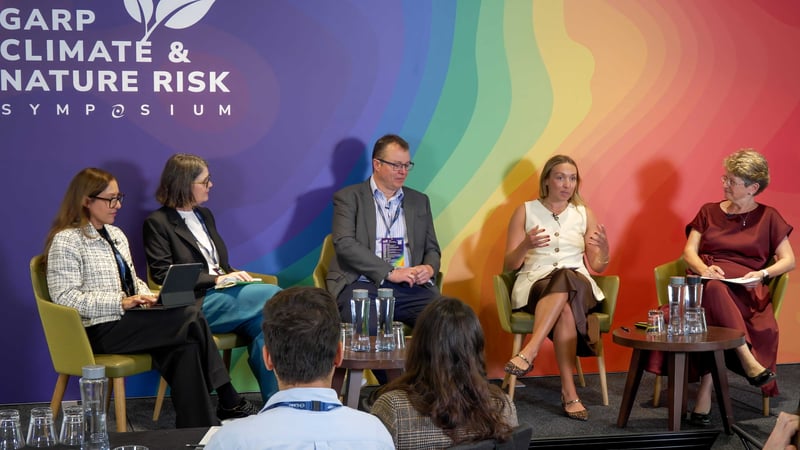
The Global Association of Risk Professionals (GARP) is pleased to present the 2026 Climate and Nature Risk Symposium.
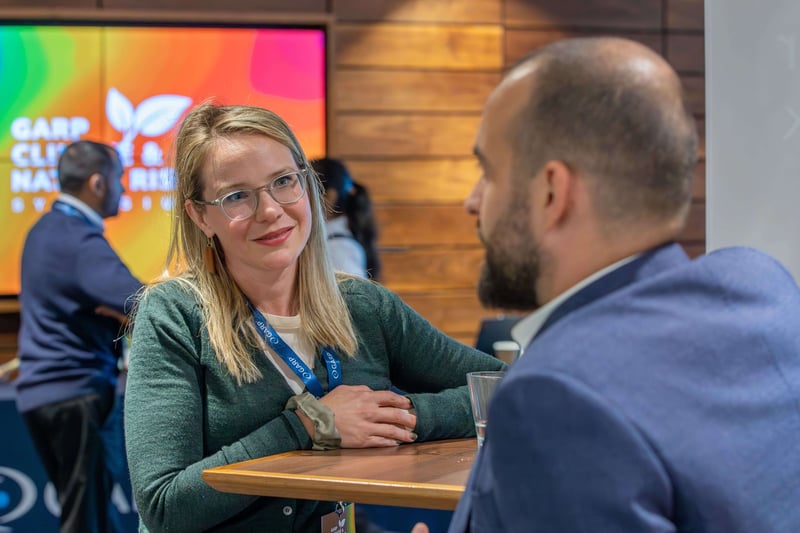
This two-day, in-person event brings together practitioner, regulatory and academic perspectives to explore how climate and nature risk management are evolving and the latest tools and techniques to build resilience and support the transition.
Day 1 will feature keynotes from several influential climate scientists, along with panels featuring financial regulators, model risk management experts, and leaders in climate adaptation. We will also examine complex and emerging risks such as food insecurity, tipping points, and transition derailment, before closing with an interactive session on climate risk innovation.
Day 2 will begin with keynotes from experts in climate and agent-based modelling, followed by sessions on levelling up resilience and bridging the gap between finance and the real economy. The event will close with an interactive workshop designed to translate risk insights into practical action..
The event is a unique opportunity for risk professionals to bring practical insights back into their own work, and to discuss cutting-edge challenges in climate and nature risk management with leading experts in the field.
Topics: Physical Risk, Climate Risk Management, Green Finance & Sustainable Business, Nature Risk Management, Transition Risk
President, GARP Risk Institute
}', 4='{type=string, value=https://s3-us-west-2.amazonaws.com/garpsalesforcepublic/Event_Speaker__c/a2f1W000001jhmwQAA/a2rPo000000e2vxIAA_Jo Paisley New 500x500.jpg}', 5='{type=string, value=Jo Paisley is President of the GARP Risk Institute, the thought leadership arm of GARP. Set up in early 2018, the Institute works across all risk disciplines, with Jo’s focus to date on climate risk management and scenario analysis, stress testing and operational resilience.
Her career began at the Bank of England where she worked in a variety of roles across macroeconomics, statistics, supervision and risk. Her last role was as a Director of the Supervisory Risk Specialists Division within the Prudential Regulation Authority, where she was heavily involved in the design and execution of the UK’s first concurrent stress test in 2014. She left the Bank in 2015 and joined HSBC as their Global Head of Stress Testing. She has also worked as an independent stress testing consultant, advising firms on how to get the most value out of stress testing.
}', 8='{type=string, value=Jo}', 9='{type=string, value=Paisley}', 10='{type=number, value=0}', 11='{type=string, value=a2h1W000009Pv6zQAC}'}Founding Director, Global Systems Institute, and Chair in Climate Change and Earth System Science, University of Exeter
}', 4='{type=string, value=https://s3-us-west-2.amazonaws.com/garpsalesforcepublic/Event_Speaker__c/a2f5d000002j9qlAAA/a2rPo000006e1JhIAI_Tim Lenton 500x500 New.jpg}', 5='{type=string, value=Professor Tim Lenton is the founding Director of the Global Systems Institute at the University of Exeter and Chair in Climate Change and Earth System Science. He has more than 25 years research experience, focused on modelling of the biosphere, climate, biogeochemical cycles, and associated tipping points. Tim is renowned for his work identifying climate tipping points, which informed the setting of the 1.5C climate target, associated net zero targets, and nationally determined contributions.
Tim works with policymakers and businesses helping them assess the risks of climate change and nature loss and highlighting the opportunities for ‘positive tipping points’ that can accelerate change towards net zero. In 2023, Professor Lenton led a team of more than 200 people from over 90 organisations in 26 countries to produce an authoritative assessment of the risks and opportunities of both negative and positive tipping points in the Earth system and society. The ‘Global Tipping Points Report’ produced in partnership with Bezos Earth Fund was published at COP28.
}', 8='{type=string, value=Tim}', 9='{type=string, value=Lenton}', 10='{type=number, value=0}', 11='{type=string, value=a2hPo000002FXovIAG}'}Author and Climate Change Communication Expert
}', 4='{type=string, value=https://s3-us-west-2.amazonaws.com/garpsalesforcepublic/Event_Speaker__c/a2fPo00000INc2DIAT/a2rPo000009LbH8IAK_George Marshall 500x500.jpg}', 5='{type=string, value=George is a consultant in the public communication of climate change, and the psychological obstacles to attitude and behaviour change. His key interest is the design of narratives that can build a consensus for climate action across the whole of society. His insights draw on hundreds of focus groups and structured interviews listening to people expressing their hopes, fears and doubts about climate change.
His book “Don’t Even Think About It: Why Our Brains Are Wired to Ignore Climate Change”, explores the social and psychological obstacles to climate action. It is currently on its seventh printing and was listed by Esquire as one of the ‘15 essential books on climate change.
}', 8='{type=string, value=George}', 9='{type=string, value=Marshall}', 10='{type=number, value=0}', 11='{type=string, value=a2hPo000002FXovIAG}'}Head of Climate and Nature Risk Section, Sustainable Banking & Governance, European Central Bank
}', 4='{type=string, value=https://s3-us-west-2.amazonaws.com/garpsalesforcepublic/Event_Speaker__c/a2fPo00000M0Ff7IAF/a2rPo00000Bjyw9IAB_Guan Schellekens 500x500.jpg}', 5='{type=string, value=Guan Schellekens is head of the Climate and Nature Risk Section within the Sustainable Banking & Governance Division in the banking supervision arm of the European Central Bank. He coordinates a team of experts responsible for the integration of these risks into the ECB supervisory approach and the day-to-day work of the Joint Supervisory Teams. Before his current position, he was Team Lead of the Climate Risk Project Management Office and lead the ECB multi-year climate and nature risk program. Before he joined the ECB in 2019, Guan held various positions at the Dutch Central Bank in supervision, policy and banking sector analysis. He holds degrees in Biochemistry, Philosophy and Public Administration.
}', 8='{type=string, value=Guan}', 9='{type=string, value=Schellekens}', 10='{type=number, value=0}', 11='{type=string, value=a2hPo000002FXovIAG}'}Head of Division, Prudential Policy, PRA
}', 4='{type=string, value=https://s3-us-west-2.amazonaws.com/garpsalesforcepublic/Event_Speaker__c/a2fPo00000M0EPhIAN/a2rPo00000BjymTIAR_Simon Hall 500x500.jpg}', 5='{type=string, value=Simon Hall is a Head of Division in the Prudential Policy directorate at the Prudential Regulation Authority leading workstreams on regulation of banks and insurance companies, including on governance, remuneration, operational resilience, data and reporting, and climate risk. He has worked across many parts of the Bank of England during his career, including monetary policy, financial stability, macroprudential and microprudential policy. He worked for a period at the Bank for International Settlements in Basel on global financial stability issues. He is currently a member of the Basel Committee on Banking Supervision’s Policy and Standards Group where he has been involved in development of international standards, such as Basel 3.1, and has led work on regulatory responses to the Covid pandemic.
}', 8='{type=string, value=Simon}', 9='{type=string, value=Hall}', 10='{type=number, value=0}', 11='{type=string, value=a2hPo000002FXovIAG}'}Head of Department, Sustainable Finance, FCA
}', 4='{type=string, value=https://s3-us-west-2.amazonaws.com/garpsalesforcepublic/Event_Speaker__c/a2fPo00000GeGXtIAN/a2rPo000006WCNaIAO_Alicia Kedzierski 500x500.png}', 5='{type=string, value=Alicia Kedzierski is the Head of Department for Sustainable Finance at the Financial Conduct Authority (FCA) and is responsible for leading across strategic priorities, policy and technical delivery. This includes embedding Sustainable Finance across the FCA’s activities. Alicia has led the Sustainability Disclosure Requirements (SDR) Policy, the Vote Reporting Group, as well as the FCA's work on Transition Finance, Transition Planning, and other high-profile projects. She is also Co-Chair of the IOSCO Assurance Workstream on Sustainable Finance.
Alicia previously led critical projects for the FCA, including the regulatory response to the Cost-of-Living Crisis. Her experience spans the UK and working across the Middle East and Africa, including development projects. Previously, Alicia worked at Deloitte, the Prudential Regulation Authority and the Bank of England. Her background is in Law.
}', 8='{type=string, value=Alicia}', 9='{type=string, value=Kedzierski}', 10='{type=number, value=0}', 11='{type=string, value=a2hPo000002FXovIAG}'}Head of Sustainable Finance Solutions, Standard Chartered Bank
}', 4='{type=string, value=https://s3-us-west-2.amazonaws.com/garpsalesforcepublic/Event_Speaker__c/a2fPo00000J5RENIA3/a2rPo000009xtcnIAA_Alex Kennedy 500x500.png}', 5='{type=string, value=Alex is the Head of Sustainable Finance Solutions at Standard Chartered Bank.
Alex is responsible for offering bespoke Sustainable Finance solutions to the Bank and to its clients. Alex has been instrumental in the issuance of the Bank’s three Sustainability Bonds and in the Bank’s launch of the world-first sustainable money market deposit in 2019. Since then, he has led the rollout of ESG derivatives, ESG repos, sustainable savings accounts, sustainable trade finance, green mortgages and an NDC aligned climate loan. He is the Bank’s lead on frameworks (green, social and transition), taxonomies, and sustainable finance impact reporting. He also leads the Bank’s work on Adaptation & Resilience, and social finance.
As well as being a trustee of the Vision Catalyst Fund, Alex helped establish and now sits on the board of a social enterprise operating between London and Kenya that serves to empower young people through employment.
}', 8='{type=string, value=Alex}', 9='{type=string, value=Kennedy}', 10='{type=number, value=0}', 11='{type=string, value=a2hPo000002FXovIAG}'}Co-Founder & COO, Climate X
}', 4='{type=string, value=https://s3-us-west-2.amazonaws.com/garpsalesforcepublic/Event_Speaker__c/a2fPo00000INeiLIAT/a2rPo000009PYSjIAO_Kamil Kluza 500x500.png}', 5='{type=string, value=Kamil is a Co-Founder and COO at Climate X, a financial services-focused and London-based data & analytics firm quantifying climate risk ratings and associated losses at an asset-level scale.
Kamil is a statistician and econometrician with a passion for tinkering with all kinds of models that project the future. He has an extensive experience in risk management and treasury functions across tier 1 banks and consultancies globally, including Barclays, Lloyds Banking Group and Accenture.
Outside of Climate X, Kamil is a NED and a member of several climate-related initiatives. He's also part of the ClimateTech Council.
}', 8='{type=string, value=Kamil}', 9='{type=string, value=Kluza}', 10='{type=number, value=0}', 11='{type=string, value=a2hPo000002FXovIAG}'}Head of Client and Portfolio Transition, HSBC Corporate and Institutional Banking
}', 4='{type=string, value=https://s3-us-west-2.amazonaws.com/garpsalesforcepublic/Event_Speaker__c/a2fPo00000Jj805IAB/a2rPo00000AUr18IAD_Marc Meyer 500x500.JPG}', 5='{type=string, value=•Marc has been involved in the bank’s sustainability agenda for the last 4 years, most recently as Head of Client and Portfolio Transition at HSBC Corporate and Institutional Banking, responsible for developing the bank’s capabilities for engaging with and supporting our client’s climate and environmental transition, managing transition and physical risks as well as driving the greening of the corporate balance sheet and meeting the bank’s financed emissions reduction and net zero commitments. Marc has very recently moved into a model management role covering ESG and IRB models. Marc has had a 30 year career in financial services spanning roles in trading, financial technology, management consulting, risk management and sustainability and has been with HSBC since 2008.
}', 8='{type=string, value=Marc}', 9='{type=string, value=Meyer}', 10='{type=number, value=0}', 11='{type=string, value=a2hPo000002FXovIAG}'}Chair & Co-Founder, Fathom
}', 4='{type=string, value=https://s3-us-west-2.amazonaws.com/garpsalesforcepublic/Event_Speaker__c/a2fPo00000I1JkbIAF/a2rPo000009B74DIAS_Paul Bates 500x500.jpg}', 5='{type=string, value=Paul is a hydrologist by background, a Fellow of the Royal Society and of the American Geophysical Union, a Royal Society Wolfson Research Merit Award holder and in 2019 was awarded a CBE for services to flood risk management. In 2024 he was awarded the John Dalton medal by the European Geosciences Union. He is also Chairman of the flood risk analytics company Fathom (www.fathom.global).
He has widespread research interests in risk, resilience, uncertainty, governance and decision-making in relation to natural hazards and global water issues. He is a double recipient of the Lloyd's of London Science of Risk prize and in 2015 he was awarded a 50th Anniversary Prize for Economic Impact by the UK's Natural Environment Research Council. He has published over 230 papers in international peer-reviewed journals, and these were cited over 2000 times in 2020 according to the ISI Web of Knowledge. He currently has a H-index of 115 on Google Scholar.
Paul's main science contribution has been to improve the prediction of flood inundation through the development of new computer models, the use of data from new airborne, satellite and ground sensors and through the better characterization of risk and uncertainty.
He has held Visiting Scientist positions at Princeton University, Dept. of Civil Engineering, Laboratoire National d'Hydraulique, Paris, the EU Joint Research Centre, Ispra, Italy and NASA Jet Propulsion Laboratory.
He also undertakes significant International collaboration, including work with the French National Space Agency (CNES), Instituto Nacional de Pesquisas da Amazônia in Brazil, as well as numerous universities in the US, Europe and Africa
}', 8='{type=string, value=Paul}', 9='{type=string, value=Bates}', 10='{type=number, value=0}', 11='{type=string, value=a2hPo000002FXovIAG}'}Programme Director, Advanced Research and Invention Agency (ARIA)
}', 4='{type=string, value=https://s3-us-west-2.amazonaws.com/garpsalesforcepublic/Event_Speaker__c/a2fPo00000GoYy9IAF/a2rPo000006nu0nIAA_Gemma Bale 500x500.jpg}', 5='{type=string, value=Gemma Bale is Associate Professor in Medical Therapeutics at the University of Cambridge. In her role as a Programme Director at the Advanced Research and Invention Agency (ARIA), she is leading a £81m programme called Forecasting Tipping Points which aims to create an early warning system for climate tipping points that equips the world with the information we need to build resilience and accelerate proactive climate adaptation.
}', 8='{type=string, value=Gemma}', 9='{type=string, value=Bale}', 10='{type=number, value=0}', 11='{type=string, value=a2hPo000002FXovIAG}'}Director of the Global Sustainability Institute (GSI), Anglia Ruskin University
}', 4='{type=string, value=https://s3-us-west-2.amazonaws.com/garpsalesforcepublic/Event_Speaker__c/a2fPo000004gL5lIAE/a2rPo000000gMQjIAM_Aled Jones 500x500.jpg}', 5='{type=string, value=Professor Aled Jones is the inaugural Director of the Global Sustainability Institute (GSI) at Anglia Ruskin University. His work in climate finance has been recognised by the State of California and he has received a key to the city of North Little Rock, Arkansas. In 2018 he was made an Honorary Fellow of the Institute & Faculty of Actuaries and currently chairs their Biodiversity Working Party. Aled’s research particularly focuses on the finance sector and government and how they will respond to the impacts of global resource trends and climate change. He was chair of the Capital Markets Climate Initiative (CMCI) on behalf of the UK Minister for Climate Change in the Department for Energy and Climate Change and a member of the UK-US Taskforce on Extreme Weather and Global Food Resilience for the UK Foreign & Commonwealth Office. He is a member of the Expert Panel for the HRH Prince of Wales’ Accounting for Sustainability (A4S). He was an invited author on Chapter 7 (international dimensions of risk) for the UK Government’s 3rd Climate Change Risk Assessment (CCRA3) which was published in 2021.
}', 8='{type=string, value=Prof. Aled}', 9='{type=string, value=Jones}', 10='{type=number, value=0}', 11='{type=string, value=a2hPo000002FXovIAG}'}Executive Director, Strategic Climate Risks Initiative (SCRI) and Associate Fellow, Chatham House
}', 4='{type=string, value=https://s3-us-west-2.amazonaws.com/garpsalesforcepublic/Event_Speaker__c/a2fPo000004uVBjIAM/a2rPo000000hDjZIAU_Laurie 500x500.jpg}', 5='{type=string, value=Laurie Laybourn is executive director of the Strategic Climate Risks Initiative (SCRI), a think-do tank that helps develop capabilities for securing a better world even as the environmental crisis escalates. He is an associate fellow at Chatham House, a visiting fellow at the Global Systems Institute, University of Exeter, and an associate fellow at the Institute for Public Policy Research (IPPR). He is a trustee of the New Economics Foundation (NEF) and sits on the board of the Economic Change Unit, an organisation he founded. Previously, he was Director of the UK Health Alliance on Climate Change and has worked at the LSE, Oxford University, and the UK Parliament. Laurie regularly appears on television, radio, and in print.
}', 8='{type=string, value=Laurie}', 9='{type=string, value=Laybourn}', 10='{type=number, value=0}', 11='{type=string, value=a2hPo000002FXovIAG}'}Director of Global Banking, Jupiter Intelligence
}', 4='{type=string, value=https://s3-us-west-2.amazonaws.com/garpsalesforcepublic/Event_Speaker__c/a2fPo00000HlwUzIAJ/a2rPo000008hSSfIAM_Rohan Hamden.jpg}', 5='{type=string, value=Rohan Hamden is Director of Global Banking at Jupiter Intelligence, where he drives the integration of physical climate risk and adaptation insights into underwriting, stress testing, and long term portfolio strategy for major banks and financial institutions. He works with global risk teams to translate advanced climate science into decision grade analytics that support resilient capital allocation.
Rohan joined Jupiter after more than two decades shaping the climate risk landscape across government, industry, and finance. He is the former CEO and co founder of XDI: The Cross Dependency Initiative, where he built a globally recognized business delivering forward looking climate risk intelligence for financial, corporate, and government clients. Under his leadership, XDI earned multiple international awards for innovation in climate resilience.
His career began as a firefighter before moving into nearly 15 years of public service. As Director of the Climate Adaptation Program for South Australia, he designed and led the state’s multi award winning adaptation framework, transforming how communities and industries prepare for climate impacts. He has advised governments across Australia, Canada, the United States, and the United Kingdom on climate adaptation strategy and infrastructure risk.
In addition to his role at Jupiter, Rohan is Founder and CEO of Adaptation Advisory, supporting high growth companies with strategic leadership and product development expertise. He holds an MBA from the University of Adelaide and a Bachelor of Applied Science from the University of South Australia.
}', 8='{type=string, value=Rohan}', 9='{type=string, value=Hamden}', 10='{type=number, value=0}', 11='{type=string, value=a2hPo000002FXovIAG}'}Chief Science Officer, MKM Research Labs
}', 4='{type=string, value=https://s3-us-west-2.amazonaws.com/garpsalesforcepublic/Event_Speaker__c/a2fPo00000INfXxIAL/a2rPo000009LtsLIAS_David Kelly 500x500.jpg}', 5='{type=string, value=David K. Kelly is Chief Science Officer at MKM Research Labs and author of "Weather Patterns to Physical Risk Swaps" (open publication) and "Handbook of Model Risk Management for Vendors" (Amazon). He has 30 years of experience in investment banking, including senior positions in front office and risk at global systemically important banks.
}', 8='{type=string, value=David K.}', 9='{type=string, value=Kelly}', 10='{type=number, value=0}', 11='{type=string, value=a2hPo000002FXovIAG}'}Principal Scientist, National Physical Laboratory
}', 4='{type=string, value=https://s3-us-west-2.amazonaws.com/garpsalesforcepublic/Event_Speaker__c/a2fPo00000INfPtIAL/a2rPo000009LuA5IAK_Dr. Maria Caffrey 500x500.jpg}', 5='{type=string, value=Dr. Maria Caffrey is a climate scientist and Principal Scientist at the UK’s National Physical Laboratory, where she works on climate modelling, risk analysis, and metrology to support science based decision making. Before joining NPL, she worked in the U.S. climate tech sector, including as Principal Climate Scientist at Gro Intelligence, leading the development of global climate risk products. She holds a PhD in Geography from the University of Tennessee, specializing in paleoclimatology.
}', 8='{type=string, value=Dr. Maria}', 9='{type=string, value=Caffrey}', 10='{type=number, value=0}', 11='{type=string, value=a2hPo000002FXovIAG}'}Principal Fellow and Head of Climate Services, Met Office
}', 4='{type=string, value=https://s3-us-west-2.amazonaws.com/garpsalesforcepublic/Event_Speaker__c/a2fPo000002CWJ7IAO/a2rPo000000W71ZIAS_Jason A Lowe OBE 500x500.jpg}', 5='{type=string, value=Professor Jason A. Lowe OBE is a Principal Fellow and Head of Climate Services for Government at the Met Office, and Chair in Interdisciplinary Climate Research in the Priestley Centre at the University of Leeds.
Jason has over 20 years of experience as a climate researcher and research leader, contributing to scientific journal publications on a diverse range of subjects relevant to both climate mitigation and adaptation. His expertise includes: selection and design of climate scenarios, climate impacts, tipping points and high impact events, earth system modelling, sea-level rise, interfacing of IAM and climate models, risk assessment, climate services and application of climate data to real-world sectors including infrastructure.
He leads the UKCP project, which developed innovative new climate scenarios for the UK and which are being used in the 3rd National Adaptation Programme. Internationally, Jason has contributed to all three working groups of the Intergovernmental Panel on Climate Change, and many UN climate reports. He regularly provides advice to Government and other stakeholders on climate variability and change.
A recent focus has been to provide information and guidance on climate change to the finance sector. He works closely with the Climate Financial Risk Forum, and he recently joined the new NGFS Scenario Technical Advisory Group. He also co-directs the project to update the independent scientific report for the 4th UK national climate change risk assessment.
}', 8='{type=string, value=Jason}', 9='{type=string, value=A Lowe}', 10='{type=number, value=0}', 11='{type=string, value=a2hPo000002FXovIAG}'}Co-Founder and CEO, XDI
}', 4='{type=string, value=https://s3-us-west-2.amazonaws.com/garpsalesforcepublic/Event_Speaker__c/a2f5d000002jIUQAA2/a2r5d000006ReQFAA0_Karl Mallon 500x500.jpg}', 5='{type=string, value=Dr. Karl Mallon is a founder of The Climate Risk Group which includes companies XDI (Cross Dependency Initiative) and Climate Valuation. With a background in both Physics and Mechanical Engineering, Karl has worked in climate change mitigation, policy and technical analysis since 1991, and has specialised in climate adaptation since 2005. His team’s pioneering work in developing technology to quantify the cost of extreme weather to the built environment led to the development of the Climate Risk Engines in 2012, are one of the most flexible, powerful and trusted sources of physical climate risk data in the world, delivering analysis to governments, corporations and the finance sector globally.
XDI has twice been ranked as a world leader in physical risk analysis in 2025, and works with over 100 banks and asset managers around the world on risk quantification and adaptation.
Karl is editor and co-author of ‘Renewable Energy Policy and Politics: A Handbook for Decision Making’ published by Earthscan (London) and a contributing author for ‘Practical Adaptation Studies’, published by Wiley. Karl is also a founding board member of The Climate Bonds Initiative (London).
}', 8='{type=string, value=Karl}', 9='{type=string, value=Mallon}', 10='{type=number, value=0}', 11='{type=string, value=a2hPo000002FXovIAG}'}Director of Innovation, Grantham Institute of Climate Change and the Environment, Imperial College London
}', 4='{type=string, value=https://s3-us-west-2.amazonaws.com/garpsalesforcepublic/Event_Speaker__c/a2fPo0000048f6vIAA/a2rPo00000B7UFxIAN_Alison G. 500x500.jpg}', 5='{type=string, value=Alyssa Gilbert is the Director of Innovation at the Grantham Institute - Climate Change and the Environment at Imperial College London where she leads on climate change and sustainability innovation activities, linking students, staff and alumni to opportunities to make a difference. She is the Director of Undaunted, a collaborative climate innovation activity between Imperial and the Royal Institution. Alyssa is the co- founder of the UK Universities Climate Network (formed to bring together UK academic expertise on climate change ahead of the COP26 negotiations). Alyssa co-convened a Master’s programme on Cleantech Innovation. Alyssa was the Director of Policy and Translation at the Grantham Institute. Prior to Imperial, she worked at a specialist energy and climate consultancy for nearly 12 years on a range of climate change mitigation and adaptation topics. She has also been a member of the Natural Environment Council’s Advisory Network.
}', 8='{type=string, value=Alyssa}', 9='{type=string, value=Gilbert}', 10='{type=number, value=0}', 11='{type=string, value=a2hPo000002FXovIAG}'}Director of Research & Program, Climate Arc
}', 4='{type=string, value=https://s3-us-west-2.amazonaws.com/garpsalesforcepublic/Event_Speaker__c/a2fPo00000LHxMBIA1/a2rPo00000BOeVxIAL_Felix Preston 500x500.jpg}', 5='{type=string, value=Felix Preston is Director of Research & Program at Arc, a non-profit organization working to unlock capital flows to meet global climate goals. He joined Arc from Generation Investment Management, where he was Director, Sustainability Impact and Research. Felix was previously Senior Research Fellow at Chatham House, focusing on sustainable transitions in industrial, energy and food systems. He has been working in sustainability for 20 years.
}', 8='{type=string, value=Felix}', 9='{type=string, value=Preston}', 10='{type=number, value=0}', 11='{type=string, value=a2hPo000002FXovIAG}'}President, GARP Risk Institute
}', 4='{type=string, value=https://s3-us-west-2.amazonaws.com/garpsalesforcepublic/Event_Speaker__c/a2f1W000001jhmwQAA/a2rPo000000e2vxIAA_Jo Paisley New 500x500.jpg}', 5='{type=string, value=Jo Paisley is President of the GARP Risk Institute, the thought leadership arm of GARP. Set up in early 2018, the Institute works across all risk disciplines, with Jo’s focus to date on climate risk management and scenario analysis, stress testing and operational resilience.
Her career began at the Bank of England where she worked in a variety of roles across macroeconomics, statistics, supervision and risk. Her last role was as a Director of the Supervisory Risk Specialists Division within the Prudential Regulation Authority, where she was heavily involved in the design and execution of the UK’s first concurrent stress test in 2014. She left the Bank in 2015 and joined HSBC as their Global Head of Stress Testing. She has also worked as an independent stress testing consultant, advising firms on how to get the most value out of stress testing.
}', 8='{type=string, value=Jo}', 9='{type=string, value=Paisley}', 10='{type=number, value=0}', 11='{type=string, value=a2h1W000009Pv6zQAC}'}Research Fellow, Grantham Research Institute at LSE; Honorary Professor in Physics, University of Warwick
}', 4='{type=string, value=https://s3-us-west-2.amazonaws.com/garpsalesforcepublic/Event_Speaker__c/a2fPo00000GV1jPIAT/a2rPo000006N2VVIA0_David Stainforth 500x500.jpg}', 5='{type=string, value=David Stainforth is a Professorial Research Fellow in the Grantham Research Institute at the London School of Economics, and an Honorary Professor in the Physics Department at the University of Warwick. He pursues research on climate science and its relationship with climate economics and policy. He focuses particularly on uncertainty analysis and on how academic assessments can better support societal and business decisions related to climate change.
David has a BA in Physics from Oxford University, an MSc in “Energy Systems and Environmental Management” from Glasgow Caledonian University, and a DPhil in “Uncertainty and Confidence in Predictions of Climate Change” again from Oxford University. He co-founded and was chief scientist of climateprediction.net - a large, citizen-science computing project designed to explore the consequences of model error in complex climate models. He has published on a diverse range of subjects including climate modelling and model interpretation, climate physics, nonlinear dynamical systems, the philosophy of climate science, climate economics, hydrology, geomorphology etc.
His book, “Predicting Our Climate Future: What we know, what we don’t know and what we can’t know”, is published by OUP.
}', 8='{type=string, value=Prof. David}', 9='{type=string, value=Stainforth}', 10='{type=number, value=0}', 11='{type=string, value=a2hPo000002FXovIAG}'}Director, Complexity Economics Programme, Institute for New Economic Thinking and Baillie Gifford Professor of Complex Systems Science, University of Oxford
}', 4='{type=string, value=https://s3-us-west-2.amazonaws.com/garpsalesforcepublic/Event_Speaker__c/a2fPo00000GV8GDIA1/a2rPo000006N4fNIAS_Doyne Farmer 500x500.jpg}', 5='{type=string, value=J. Doyne Farmer is Director of the Complexity Economics programme at the Institute for New Economic Thinking and Baillie Gifford Professor of Complex Systems Science at the Smith School of Enterprise and the Environment, University of Oxford. He is also External Professor at the Santa Fe Institute and Chief Scientist at Macrocosm.
His current research is in economics, including agent-based modeling, financial instability and technological progress. He was a founder of Prediction Company, a quantitative automated trading firm that was sold to UBS in 2006. His past research includes complex systems, dynamical systems theory, time series analysis and theoretical biology. His book, Making Sense of Chaos: A Better Economics for a Better World, was published in 2024.
During the 1980s he was an Oppenheimer Fellow and the founder of the Complex Systems Group at Los Alamos National Laboratory. While a graduate student in the 1970s he built the first wearable digital computer, which was successfully used to predict the game of roulette.
}', 8='{type=string, value=Doyne}', 9='{type=string, value=Farmer}', 10='{type=number, value=0}', 11='{type=string, value=a2hPo000002FXovIAG}'}Risk Modelling Manager, Credit Insights & Analytics, NatWest
}', 4='{type=string, value=https://s3-us-west-2.amazonaws.com/garpsalesforcepublic/Event_Speaker__c/a2fPo00000KlnwEIAR/a2rPo00000B6B7JIAV_Sofia V. 500x500.JPG}', 5='{type=string, value=Sofia is a risk modelling lead with more than a decade of experience in banking analytics, specialising in climate risk, economic capital, and advanced credit risk modelling. She leads modelling teams at NatWest, overseeing the development and governance of climate related PD/LGD and stress testing models, economic capital frameworks, and securitisation risk models used across regulatory submissions and strategic capital planning. Her work focuses on translating complex model outputs into meaningful insights for decision makers and designing analytical frameworks that help the organisation understand the financial and credit risk impacts of climate transition and physical risks. Sofia has an academic background in applied mathematics and physical sciences, as well as in operational research and computational optimization.
}', 8='{type=string, value=Sofia}', 9='{type=string, value=Varypati}', 10='{type=number, value=0}', 11='{type=string, value=a2hPo000002FXovIAG}'}Senior Risk Manager, Santander UK
}', 4='{type=string, value=https://s3-us-west-2.amazonaws.com/garpsalesforcepublic/Event_Speaker__c/a2fPo00000JudwbIAB/a2rPo00000Ab8LpIAJ_Kelly Georgea 500x500.jpg}', 5='{type=string, value=Kelly Georgea is a Senior Risk Manager at Santander UK, leading the ESG and Capital risk teams. Kelly’s expertise spans ESG risk management, Credit Risk stress testing, regulatory compliance, data analysis, and cross-functional collaboration, with a strong track record in delivering climate scenario analysis and contributing to key regulatory disclosures. Holding an MSc in Financial Analysis, Kelly combines technical expertise with a passion for driving change and improving decision-making in risk management.
}', 8='{type=string, value=Kelly}', 9='{type=string, value=Georgea}', 10='{type=number, value=0}', 11='{type=string, value=a2hPo000002FXovIAG}'}Managing Director and Head of Climate, Diversity and Advisory, British International Investment plc
}', 4='{type=string, value=https://s3-us-west-2.amazonaws.com/garpsalesforcepublic/Event_Speaker__c/a2fPo00000JjQ0EIAV/a2rPo00000AVSn3IAH_Amal-Lee Amin 500x500.jpg}', 5='{type=string, value=Amal-Lee Amin joined British International Investment in February 2020 to lead implementation of the climate strategy for aligning to the goals of the Paris Agreement. A passionate advocate for sustainable development, she now also leads teams on gender and diversity and advisory. Amal-Lee has had senior advisor roles including the UK’s COP26 Presidency, the Green Climate Fund and is currently a member of the independent High Level Expert Group on Climate Finance, the OECD Advisory Group on Climate and Economic Resilience and the UAE’s Independent Climate Change Accelerator. From 2015-2020 Amal-Lee was Chief of Climate Change at the Inter-American Development Bank, working across the MDB system to scale climate finance in developing countries. For 10 years Amal-Lee led policy on sustainable energy and climate change in key roles within the UK Government’s Cabinet Office, DECC, DEFRA and Foreign and Commonwealth Office. From 2010-15 Amal-Lee developed E3G’s international climate finance programme, with focus on China and Latin America.
}', 8='{type=string, value=Amal-Lee}', 9='{type=string, value=Amin}', 10='{type=number, value=0}', 11='{type=string, value=a2hPo000002FXovIAG}'}Chief Product & Strategy Officer, Allica Bank
}', 4='{type=string, value=https://s3-us-west-2.amazonaws.com/garpsalesforcepublic/Event_Speaker__c/a2fPo00000Jj8BNIAZ/a2rPo00000AUslBIAT_Conrad 500x500.jpg}', 5='{type=string, value=•Conrad is Chief Product & Strategy Officer at Allica Bank, which has been named by The Sunday Times as the UK’s fastest-growing company and by Deloitte as the UK’s fastest-growing financial technology (fintech) firm ever. Allica is bringing expert relationship banking back to established SMEs, supported by modern technology. Previously Conrad was the sole founder of Funding Options, an online business lending marketplace named in the 2022 Financial Times FT1000 list of Europe’s fastest-growing firms, now exited. Conrad is a Chartered Management Accountant, and prior to his career in fintech worked at leading banks.
}', 8='{type=string, value=Conrad}', 9='{type=string, value=Ford}', 10='{type=number, value=0}', 11='{type=string, value=a2hPo000002FXovIAG}'}COO, Bankers for Net Zero
}', 4='{type=string, value=https://s3-us-west-2.amazonaws.com/garpsalesforcepublic/Event_Speaker__c/a2fPo00000Gb4BVIAZ/a2rPo000006TCiHIAW_Hannah Cool 600X500.jpg}', 5='{type=string, value=Hannah is Chief Operating Officer at B4NZ and has over a decade of experience with the Big4 leading major transformation programmes and for the last 5 years has worked with executive leadership teams and boards, advising on ESG and sustainability strategy.
Hannah has worked with major cross sector organisations, focussing on climate change and risk management. In doing this Hannah has been compelled to work with market coalitions and initiatives which define the future ecosystem where finance can flow with ease and organisations demonstrating the right sustainable behaviours are financially rewarded.
The challenges of facilitating the flow of capital to the real economy and working across innovative market solutions is what lead Hannah to join B4NZ.
}', 8='{type=string, value=Hannah}', 9='{type=string, value=Cool}', 10='{type=number, value=0}', 11='{type=string, value=a2hPo000002FXovIAG}'}Deputy CEO, Green Finance Institute
}', 4='{type=string, value=https://s3-us-west-2.amazonaws.com/garpsalesforcepublic/Event_Speaker__c/a2fPo000002CSgvIAG/a2rPo000000W677IAC_Ingrid Holmes 500x500.png}', 5='{type=string, value=Ingrid Holmes is Deputy CEO of the Green Finance Institute. She joined GFI in 2021 from Federated Hermes, where she was a Director in the Responsible Investment Team and led the development of the firm’s first Nero Zero Policy. She previously held roles at dedicated low carbon asset manager Climate Change Capital, and also climate diplomacy thinktank E3G, where she established and built their Sustainable Finance Programme. She also held roles as an Adviser in the UK Parliament and in the UK’s environment department DEFRA.
She has 20 years of experience working on environmental policy and sustainable finance. She has previously served as a Member of the European Commission’s High Level Expert Group on Sustainable Finance and ran the Secretariat for the Green Finance Taskforce, which led to the establishment of the Green Finance Institute. Her abiding passion is the development of institutional, policy and financial solutions to scale investment into climate change solutions.
Ingrid has a BSc in Biological Sciences (Hons Zoology) from the University of Edinburgh and an MSc in Environmental Technology from Imperial College London.
}', 8='{type=string, value=Ingrid}', 9='{type=string, value=Holmes}', 10='{type=number, value=0}', 11='{type=string, value=a2hPo000002FXovIAG}'}Senior Scientific Developer, Fathom
}', 4='{type=string, value=https://s3-us-west-2.amazonaws.com/garpsalesforcepublic/Event_Speaker__c/a2fPo00000McwmHIAR/a2rPo00000C7yTZIAZ_Stephen Chuter Fathom 500x500.jpg}', 5='{type=string, value=Stephen is a Senior Scientific Developer at Fathom. Using his Earth observation and computational modeling expertise, Stephen’s role involves investigating the integration of satellite data into Fathom’s platforms to develop scientifically robust, cutting-edge models.
Stephen joined Fathom from the University of Bristol, where he held a European Space Agency (ESA) Climate Change Initiative fellowship to explore how land ice mass has impacted regional sea levels over the past 30 years. Prior to this, Stephen worked on statistical modeling, combining Earth observation data and Bayesian modeling to better understand Antarctic mass change. He holds a PhD in Geography, which involved using the transformative ESA CryoSat-2 mission to better understand the morphology of Antarctic ice shelves, and its implications for mass change.
At Fathom, Stephen relishes putting his scientific knowledge and the latest modeling techniques into play to help customers understand and address climate risks. He enjoys the friendly collaborative buzz at Fathom and its culture of camaraderie. His work lets him maintain his academic interests and links with the University of Bristol, where he holds an honorary Senior Research Fellow position.
}', 8='{type=string, value=Stephen}', 9='{type=string, value=Chuter}', 10='{type=number, value=0}', 11='{type=string, value=a2hPo000002FXovIAG}'}Principal Machine Learning Engineer, Fathom
}', 4='{type=string, value=https://s3-us-west-2.amazonaws.com/garpsalesforcepublic/Event_Speaker__c/a2fPo00000McvyHIAR/a2rPo00000C7mU2IAJ_Chris Lucas Fathom 500x500.jpg}', 5='{type=string, value=Chris develops and implements machine learning solutions to enhance Fathom’s flood and climate modeling capabilities, bridging the gap between numerical scientific methods and modern AI approaches.
Chris completed his PhD in high energy physics at the Compound Muon Solenoid (CMS) experiment at CERN before transitioning into software engineering and machine learning. His career has spanned medical diagnosis using Bayesian inference, vehicle condition assessment with computer vision modeling, patient support systems using large language models and much more, always focusing on creating real-world impact through machine learning applications.
At Fathom, Chris is making the most of the opportunity to advance scientific progress through machine learning while addressing crucial real-world challenges in flood modeling. Working with world leaders in flood and climate modelling is a huge motivation for him, as it provides an opportunity to share and combine complementary backgrounds and experiences to be greater than the sum of our parts.
}', 8='{type=string, value=Chris}', 9='{type=string, value=Lucas}', 10='{type=number, value=0}', 11='{type=string, value=a2hPo000002FXovIAG}'}Speakers
Prof. Jason A Lowe, OBE
Amal-Lee Amin
Dr. Gemma Bale
Professor Paul Bates CBE FRS
Dr. Maria Caffrey
Dr. Stephen Chuter
Hannah Cool
Prof. J. Doyne Farmer
Conrad Ford
Kelly Georgea
Alyssa Gilbert
Simon Hall
Rohan Hamden
Ingrid Holmes
Prof. Aled Jones
Alicia Kedzierski
David K. Kelly
Alex Kennedy
Kamil Kluza
Laurie Laybourn
Prof. Tim Lenton OBE
Chris Lucas
Dr. Karl Mallon
George Marshall
Marc Meyer
Jo Paisley
Felix Preston
Guan Schellekens
Prof. David Stainforth
Sofia Varypati
Moderators
Tim Barlow
Dr. Maxine Nelson
Jo Paisley
Valentina Ramirez
Prof. Erica Thompson
Agenda/Schedule
*Date and Time noted as
-
Speakers
Jo Paisley, President, GARP Risk Institute
-
Speakers
Prof. Tim Lenton OBE, Founding Director, Global Systems Institute, and Chair in Climate Change and Earth System Science, University of Exeter
-
Speakers
George Marshall, Author and Climate Change Communication Expert
-
Speakers
Simon Hall, Head of Division, Prudential Policy, PRA
Alicia Kedzierski, Head of Department, Sustainable Finance, FCA
Guan Schellekens, Head of Climate and Nature Risk Section, Sustainable Banking & Governance, European Central Bank
Moderator
Jo Paisley, President, GARP Risk Institute
-
Speakers
Alex Kennedy, Head of Sustainable Finance Solutions, Standard Chartered Bank
Kamil Kluza, Co-Founder & COO, Climate X
Marc Meyer, Head of Client and Portfolio Transition, HSBC Corporate and Institutional Banking
Moderator
Valentina Ramirez, Head of Climate Strategy Implementation, IIGCC
-
Speakers
Professor Paul Bates CBE FRS, Chair & Co-Founder, Fathom
-
Speakers
Dr. Gemma Bale, Programme Director, Advanced Research and Invention Agency (ARIA)
Prof. Aled Jones, Director of the Global Sustainability Institute (GSI), Anglia Ruskin University
Laurie Laybourn, Executive Director, Strategic Climate Risks Initiative (SCRI) and Associate Fellow, Chatham House
Moderator
Dr. Maxine Nelson, SVP, GARP Risk Institute
-
Speakers
Rohan Hamden, Director of Global Banking, Jupiter Intelligence
-
Speakers
Prof. Jason A Lowe, OBE, Principal Fellow and Head of Climate Services, Met Office
Dr. Maria Caffrey, Principal Scientist, National Physical Laboratory
David K. Kelly, Chief Science Officer, MKM Research Labs
Moderator
Prof. Erica Thompson, Associate Professor of Modelling for Decision Making, UCL Department of Science, Technology, Engineering and Public Policy
-
Speakers
Alyssa Gilbert, Director of Innovation, Grantham Institute of Climate Change and the Environment, Imperial College London
Dr. Karl Mallon, Co-Founder and CEO, XDI
Felix Preston, Director of Research & Program, Climate Arc
Moderator
Jo Paisley, President, GARP Risk Institute
-
Speakers
Jo Paisley, President, GARP Risk Institute
-
Speakers
Prof. David Stainforth, Research Fellow, Grantham Research Institute at LSE; Honorary Professor in Physics, University of Warwick
-
Speakers
Prof. J. Doyne Farmer, Director, Complexity Economics Programme, Institute for New Economic Thinking and Baillie Gifford Professor of Complex Systems Science, University of Oxford
-
Speakers
Kelly Georgea, Senior Risk Manager, Santander UK
Sofia Varypati, Risk Modelling Manager, Credit Insights & Analytics, NatWest
Moderator
Tim Barlow, Head of EMEA and APAC, First Street
-
Speakers
Amal-Lee Amin, Managing Director and Head of Climate, Diversity and Advisory, British International Investment plc
Hannah Cool, COO, Bankers for Net Zero
Conrad Ford, Chief Product & Strategy Officer, Allica Bank
Ingrid Holmes, Deputy CEO, Green Finance Institute
Moderator
Jo Paisley, President, GARP Risk Institute
-
*This is a separate event and not included with Symposium registration.
Join us for a private executive roundtable exploring how leading financial institutions are integrating advanced flood hazard data and catastrophe modeling into credit risk, capital planning, and portfolio management frameworks. This strategic session will examine how firms can move from abstract climate concerns to quantified financial exposure, leveraging high-accuracy terrain data, physically based flood modeling, and probabilistic loss analytics.
Key Discussion Points:
- The Capital Question – How exposed are we?
- The Data Question – Can we trust the underlying hazard assumptions?
- The Volatility Question – What is our probabilistic loss profile?
- The Forward-Looking Question – How does this change under climate policy divergence?
Speakers
Dr. Stephen Chuter, Senior Scientific Developer, Fathom
Chris Lucas, Principal Machine Learning Engineer, Fathom
June 9, 2026
June 10, 2026
Pricing
-
Symposium Only
June 9 (All Day) and June 10 (8AM - 1PM)
Certified
GBP 480
Registration closed
Non-Certified
GBP 840
Registration closed
Bundle*
June 9 and June 10 (Includes Afternoon Workshop)
Certified
GBP 600
Registration closed
Non-Certified
GBP 1080
Registration closed
-
Symposium Only
June 9 (All Day) and June 10 (8AM - 1PM)
Certified
GBP 720
Registration closed
Non-Certified
GBP 960
Registration closed
Bundle*
June 9 and June 10 (Includes Afternoon Workshop)
Certified
GBP 840
Registration closed
Non-Certified
GBP 1200
Registration closed
-
Symposium Only
June 9 (All Day) and June 10 (8AM - 1PM)
Certified
GBP 840
Register by
June 9, 2026Non-Certified
GBP 1080
Register by
June 9, 2026Bundle*
June 9 and June 10 (Includes Afternoon Workshop)
Certified
GBP 960
Register by
June 9, 2026Non-Certified
GBP 1320
Register by
June 9, 2026
Symposium Only
June 9 (All Day) and June 10 (8AM - 1PM)
Certified
GBP 480
Registration closed
Non-Certified
GBP 840
Registration closed
Bundle*
June 9 and June 10 (Includes Afternoon Workshop)
Certified
GBP 600
Registration closed
Non-Certified
GBP 1080
Registration closed
Symposium Only
June 9 (All Day) and June 10 (8AM - 1PM)
Certified
GBP 720
Registration closed
Non-Certified
GBP 960
Registration closed
Bundle*
June 9 and June 10 (Includes Afternoon Workshop)
Certified
GBP 840
Registration closed
Non-Certified
GBP 1200
Registration closed
Symposium Only
June 9 (All Day) and June 10 (8AM - 1PM)
Certified
GBP 840
Register by
June 9, 2026
Non-Certified
GBP 1080
Register by
June 9, 2026
Bundle*
June 9 and June 10 (Includes Afternoon Workshop)
Certified
GBP 960
Register by
June 9, 2026
Non-Certified
GBP 1320
Register by
June 9, 2026
Certified are those who currently hold the SCR and/or RAI Certificate, FRM Certification, and/or ERP Certification. Pricing is inclusive of 20% VAT.
Would you like to send 3 or more people? For special team registration rates please contact events@garp.com.
*More information about the Workshop on June 10 coming soon.
Gold Sponsors
Fathom
Climate X
First Street
Silver Sponsors
Jupiter Intelligence
Climate ARC | XDI
Supporting Associations
IIGCC
Exhibitors
Haskoning
See What's Upcoming
Explore our calendar of events on financial risk, AI, sustainability and climate, and more.