Risk Management of Non-Bank Financial Intermediaries
June 2023
The Risk Snapshot Series highlights key insights from GARP’s quarterly survey of Financial Risk Managers (FRM®) about critical risk issues global risk managers and their organizations are navigating.
The IMF's 2023 Global Financial Stability Report noted that the nonbank financial intermediary (NBFI) sector has reached nearly 50 percent of global financial assets. Since "the smooth functioning of the nonbank sector is vital for financial stability," the report warns of "vulnerabilities related to financial leverage, liquidity, and interconnectedness" in the NBFI ecosystem.
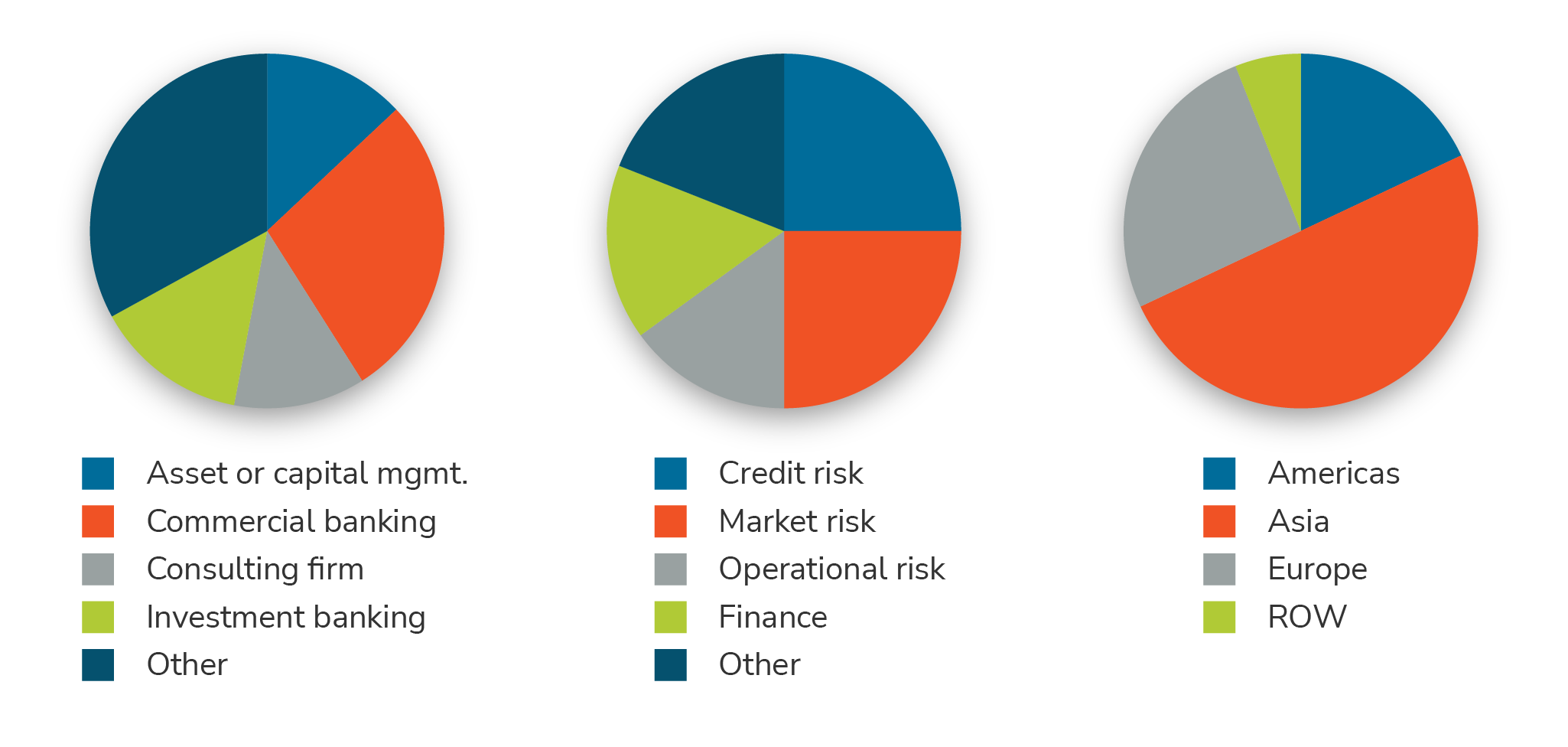
The GARP Benchmarking Initiative (GBI)® surveyed Financial Risk Managers (FRM®) globally to learn how dealing with these "shadow banks" impacts risk management. Almost 500 FRM-Certified practitioners took part, representing a broad range of financial services firms and risk disciplines around the world. Most respondents work at large firms and the vast majority have at least five years of risk management experience.
Read on for the key insights from the survey results.
Insight #1 – Exposure to Risks From NBFIs Is Significant and Growing
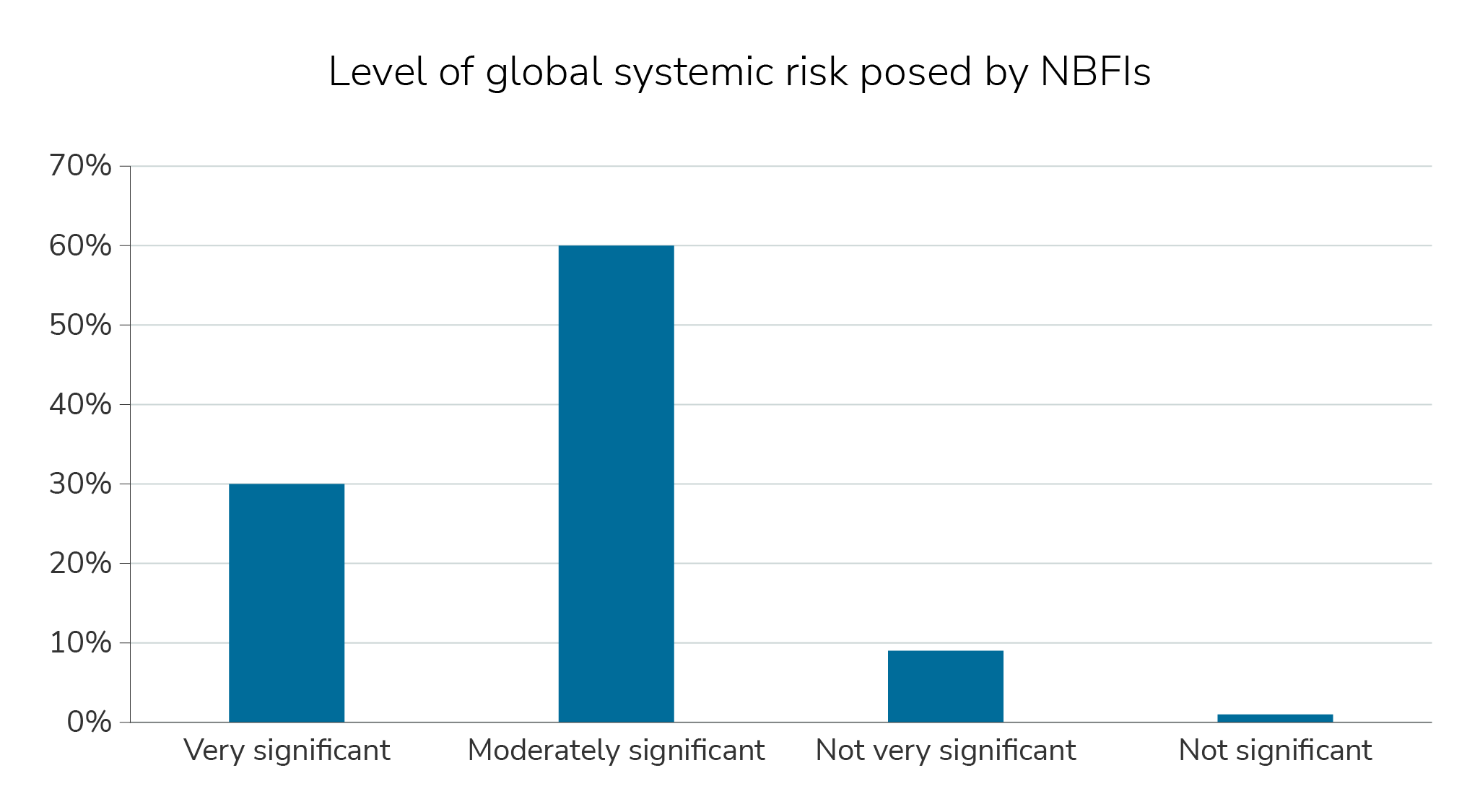
Over 90% believe that the level of systemic risk that NBFIs pose to the global financial system is either very or moderately significant.
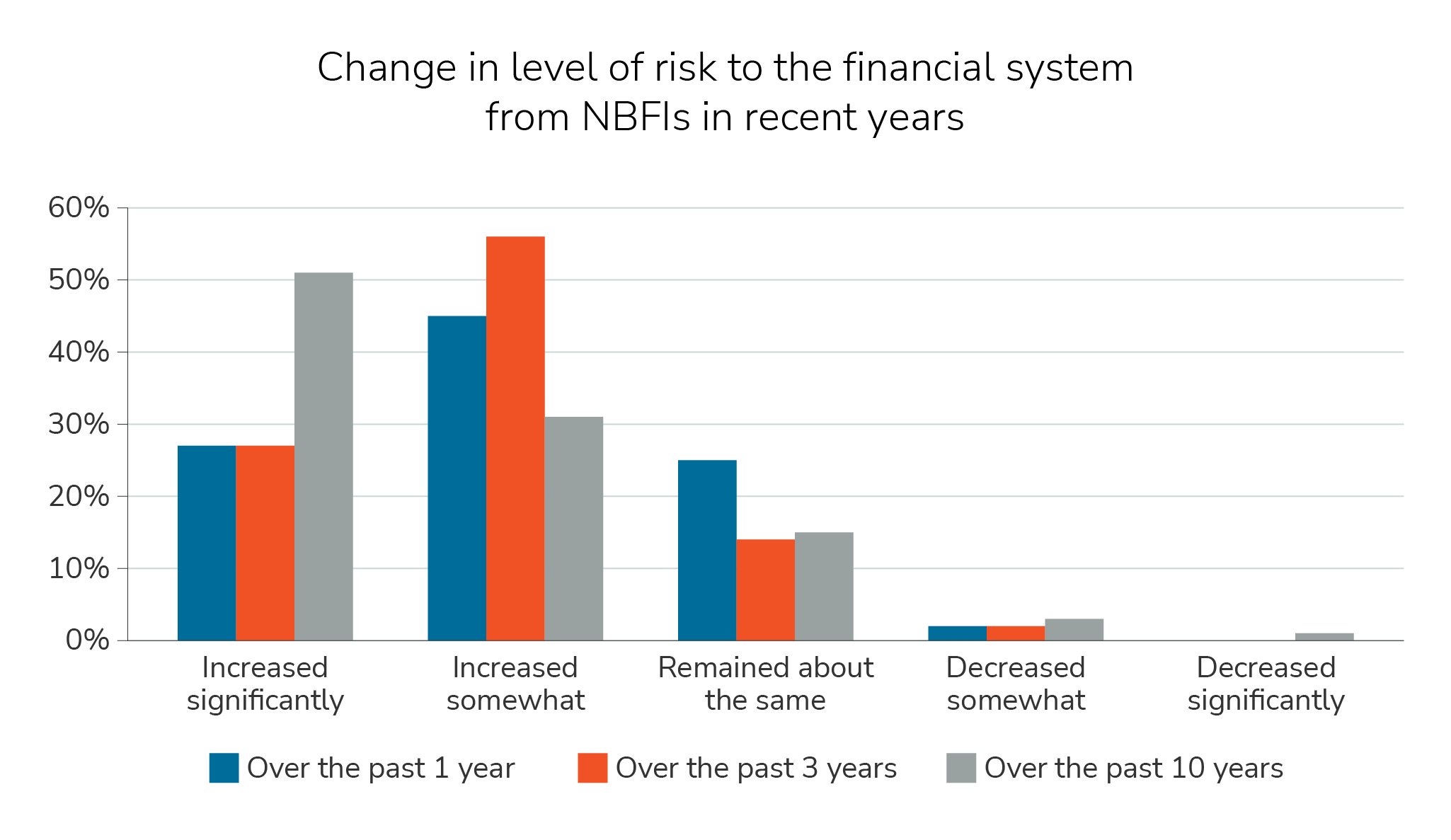
Solid majorities believe that the level of systemic risk that NBFIs pose to the global financial system has increased over time.
Insight #2 – Credit Risk Is the Most Significant Concern With NBFIs
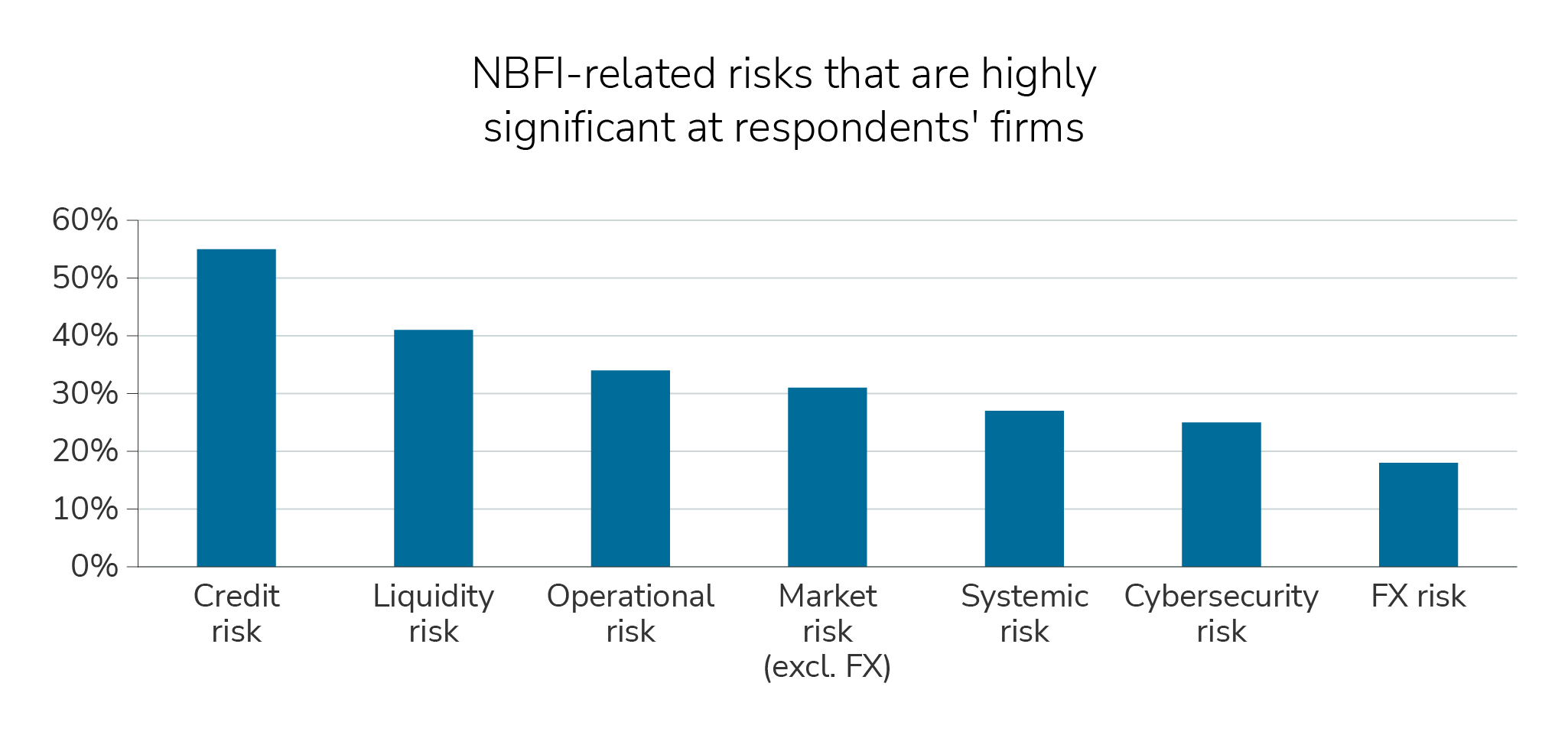
Credit risk led the way when respondents were asked to identify the most significant risks their firm faced from NBFIs. Over 40% of respondents indicated that their firms were moderately or highly exposed to risks from NBFIs, led by those at Asset Management firms (61%) and Investment Banks (56%). More than 20% reported that their firm had experienced a significant risk event related to NBFIs that impacted its financial position or reputation.
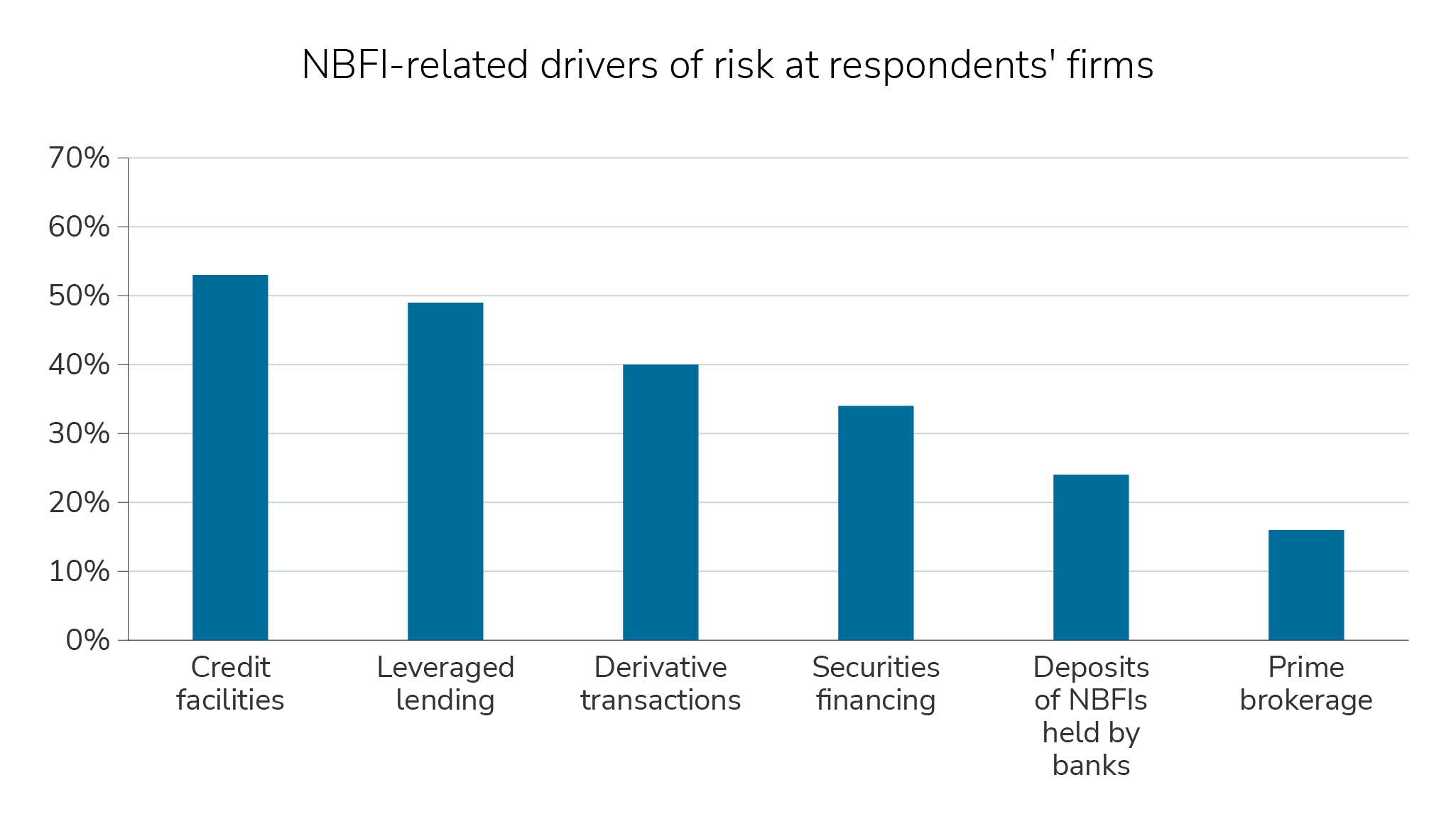
Participants view credit facilities and leveraged lending as the top drivers of risk in their firm's interactions with NBFIs.
Insight #3 – Crypto Exchanges Are Riskiest NBFI; N. America Has Greatest NBFI Risk
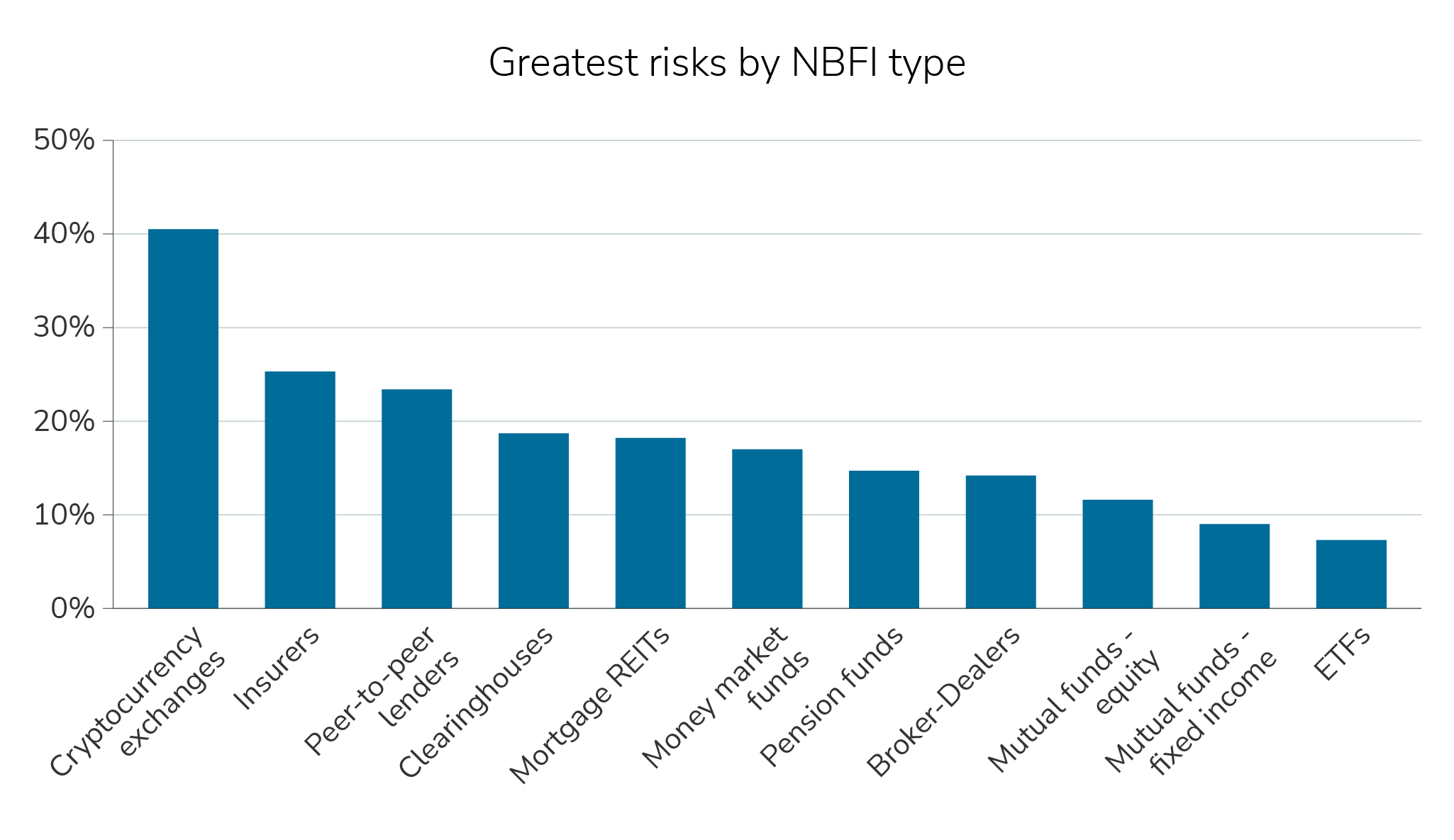
Cryptocurrency exchanges were viewed as the riskiest NBFI type, while ETFs and mutual funds were cited least often.
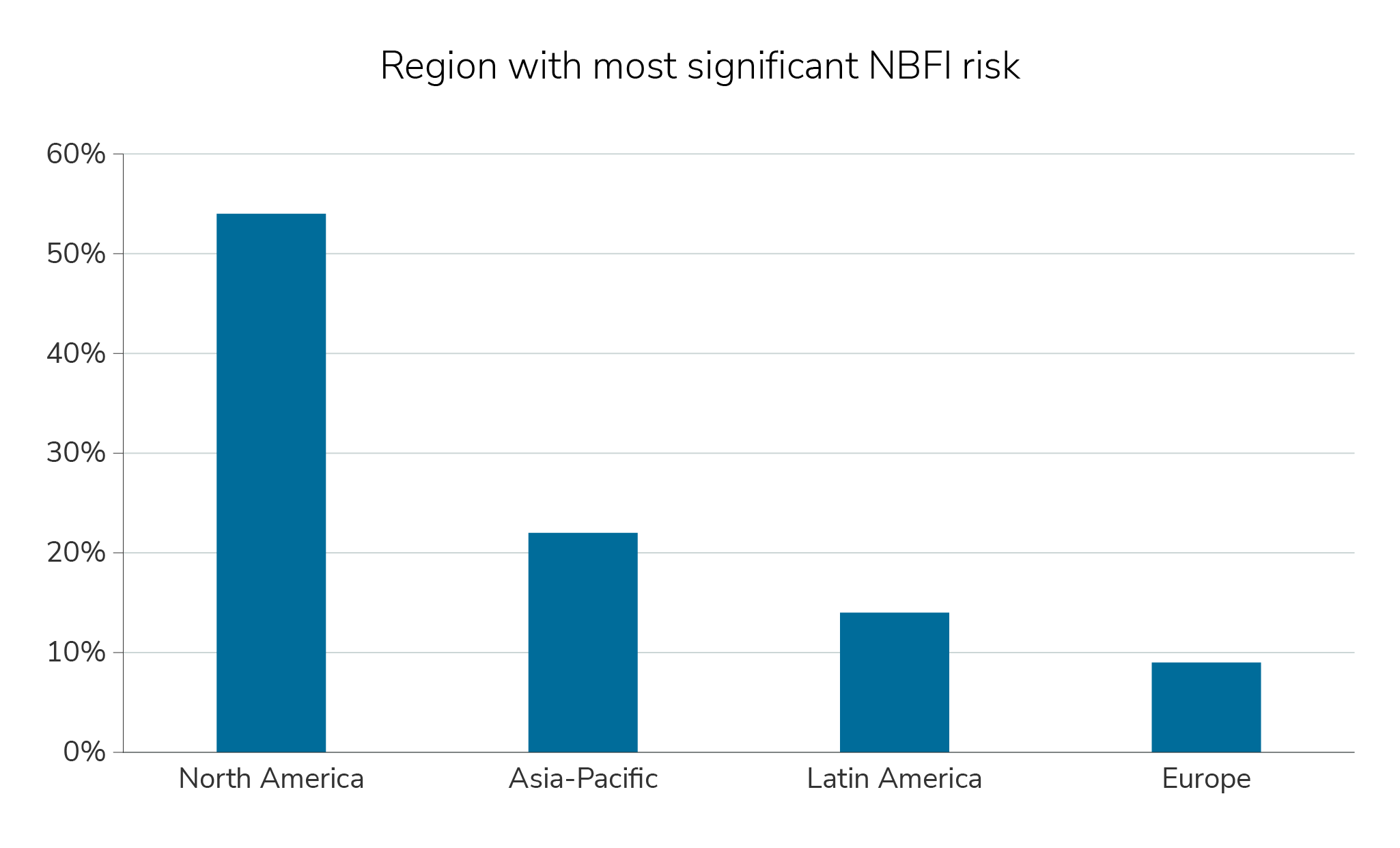
Over half the respondents believe North America has the most significant NBFI risk.
Insight #4 – Risk Management of NBFI Exposure Is Developing
Despite the perceived exposure, two-thirds reported that their firm did not have designated risk management personnel responsible for assessing the risk related to NBFIs, and a third noted that their firm did not have specific risk management policies in place to counter the threat.
Only 23% answered that they were very confident about their firm's ability to manage risks associated with NBFIs, but 56% reported that their firms strengthened risk management procedures related to NBFIs over the past year.
Insight #5 – Measuring NBFI's Impact on Overall Firm Risk Profile Is Challenging
Qualitative assessments (e.g., risk appetite framework, risk culture) were the most common (41%) technique respondents reported using to measure the impact of NBFIs on their firm's risk profile. Next were stress testing and scenario analysis and quantitative metrics (e.g., VaR, EL).
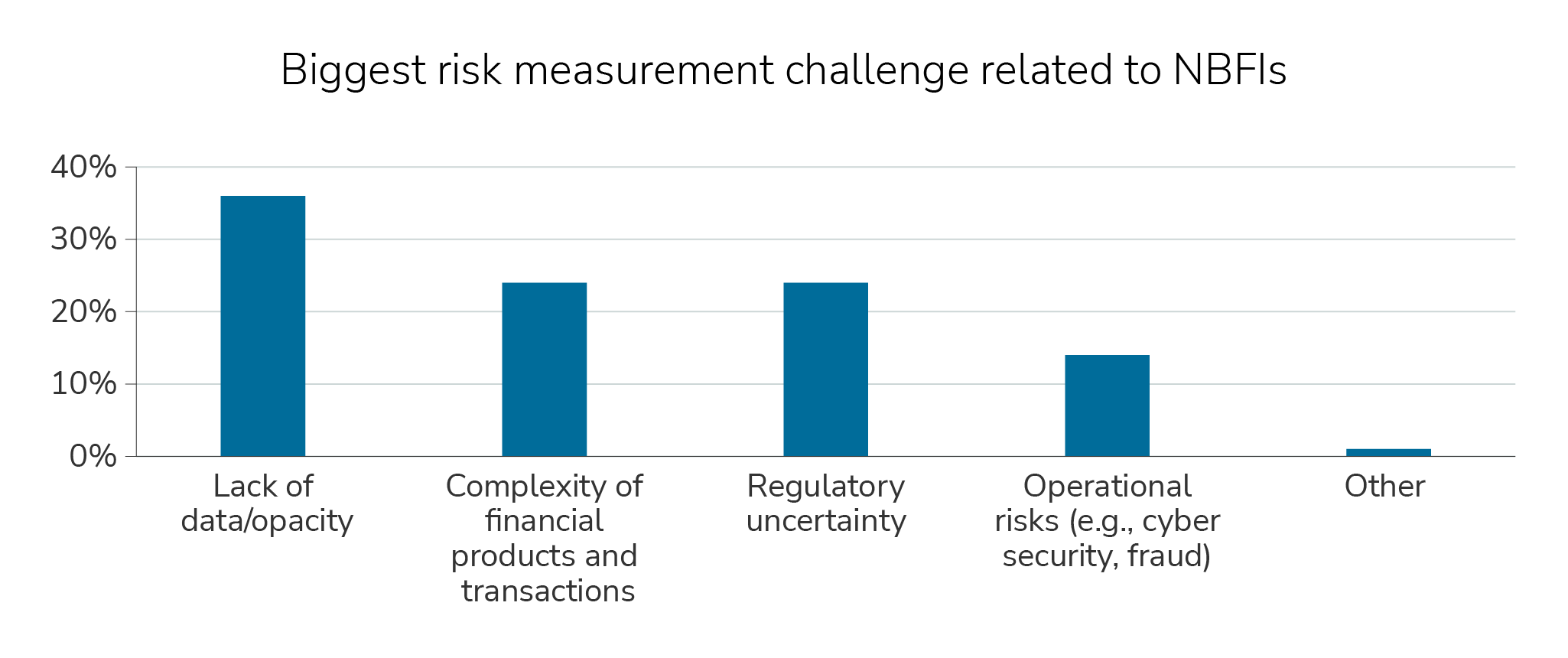
While most (62%) rated stress testing as moderately effective in identifying risks associated with NBFIs, only 18% rated it highly effective. Lack or opacity of data was cited as the biggest challenge when managing exposure to NBFIs.
Insight #6 – Size, Financial System Interconnectedness Are Primary NBFI Concerns
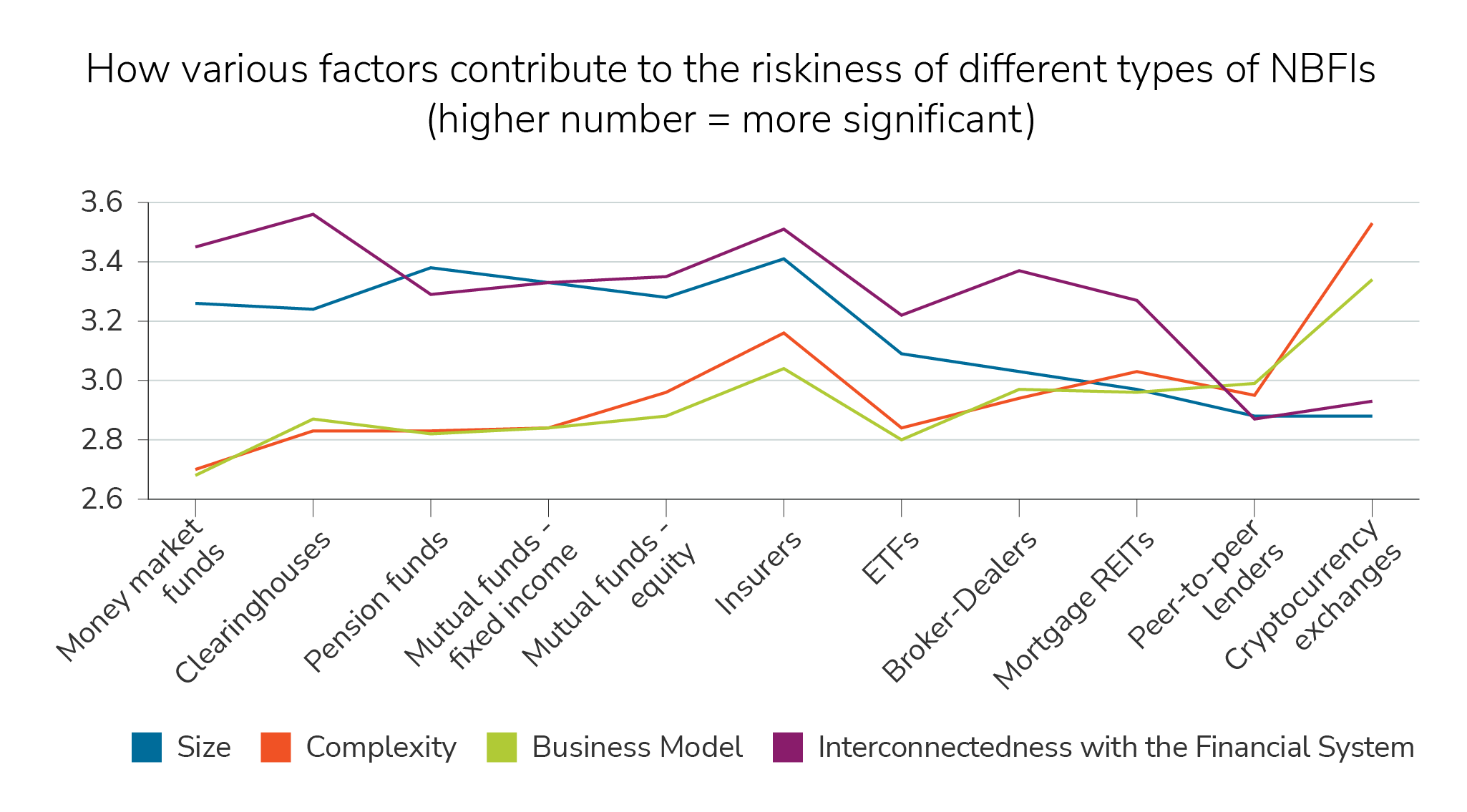
Interconnectedness with the financial system and size are viewed as the dominant contributors to the riskiness of most NBFIs. The exceptions are crypto exchanges and peer-to-peer lenders, where the underlying business model and complexity are most concerning.
Insight #7 – Additional Regulation of NBFIs Is Needed
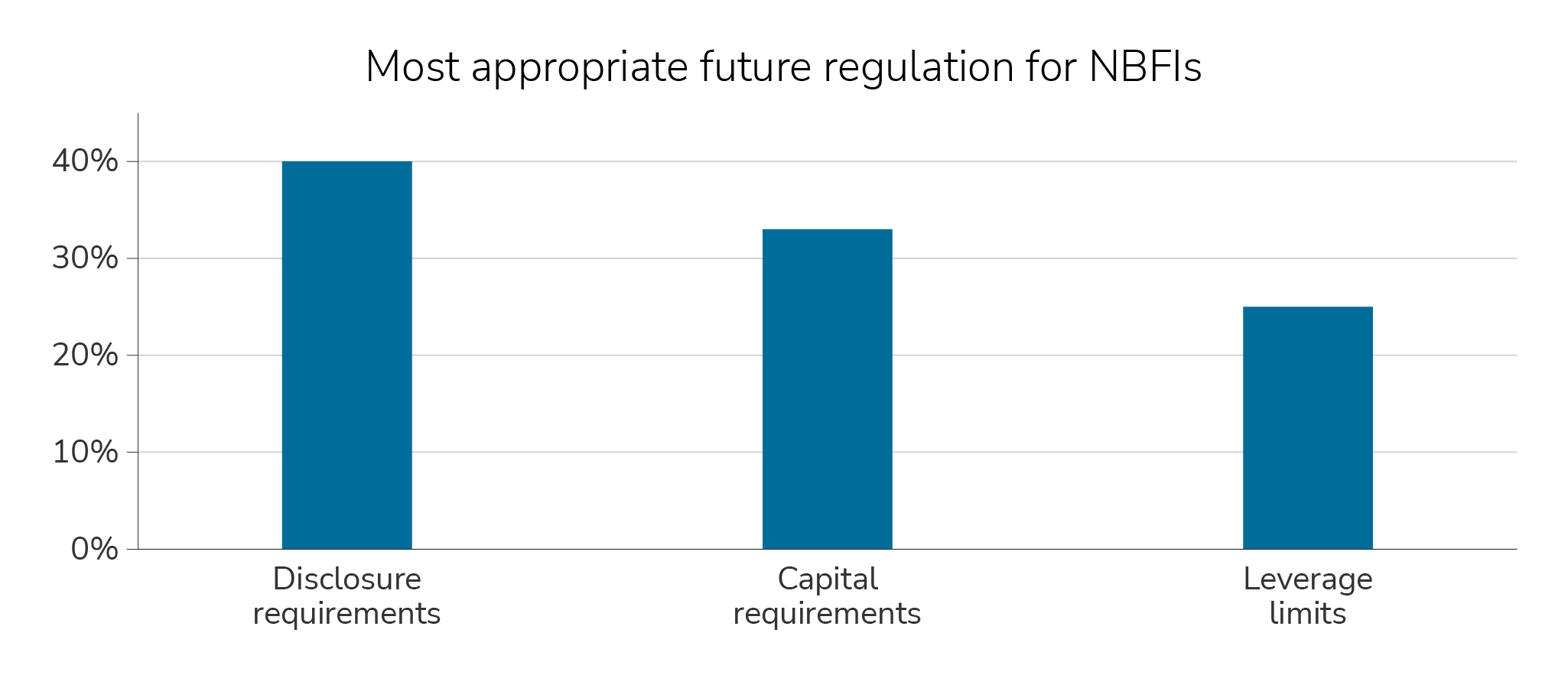
About half (52%) of respondents indicated that current regulatory oversight is moderately effective in mitigating the risks associated with NBFIs, while over one-third (35%) believe it's not very effective. More than 90% agree that additional regulation for NBFIs is needed, with disclosure and capital requirements being cited most often. Establishing industry-wide standards and guidelines was the first choice for promoting cooperation an din formation sharing between regulators and NBFIs.
Survey Demographics
Nearly 500 FRM-Certified professionals participated in this survey, representing a broad swath of financial services firms and risk disciplines across the globe as shown in the respondent breakdowns by region, firm type, and primary risk area in the charts below.