Energy Security Risk
2024 Risk Trend Preview
January 2024
The Risk Snapshot Series highlights key insights from GARP’s quarterly survey of Financial Risk Managers (FRM®) about critical risk issues global risk managers and their organizations are navigating.
The GARP Benchmarking Initiative (GBI)® recently invited Financial Risk Managers (FRM®) globally to participate in a survey designed to understand:
- Sources of energy security risk
- Impact of energy security on traditional risk measures
- Impact of energy security on the reduction in global carbon emissions
The survey also gathered insight on how risk managers are currently assessing the biggest financial industry risk factors identified in 2023 and their forecast of those likely to be most impactful in 2024.
Over 400 risk practitioners responded to the survey from a broad range of financial service firms and risk disciplines around the world. Roughly 59% of respondents work at large firms (over 1,000 employees) with more than 60% reporting at least five years of risk management experience.
Read on for key insights derived from the survey results.
Insight #1 – Energy Security Risk is
Considered a Fundamental Risk Driver
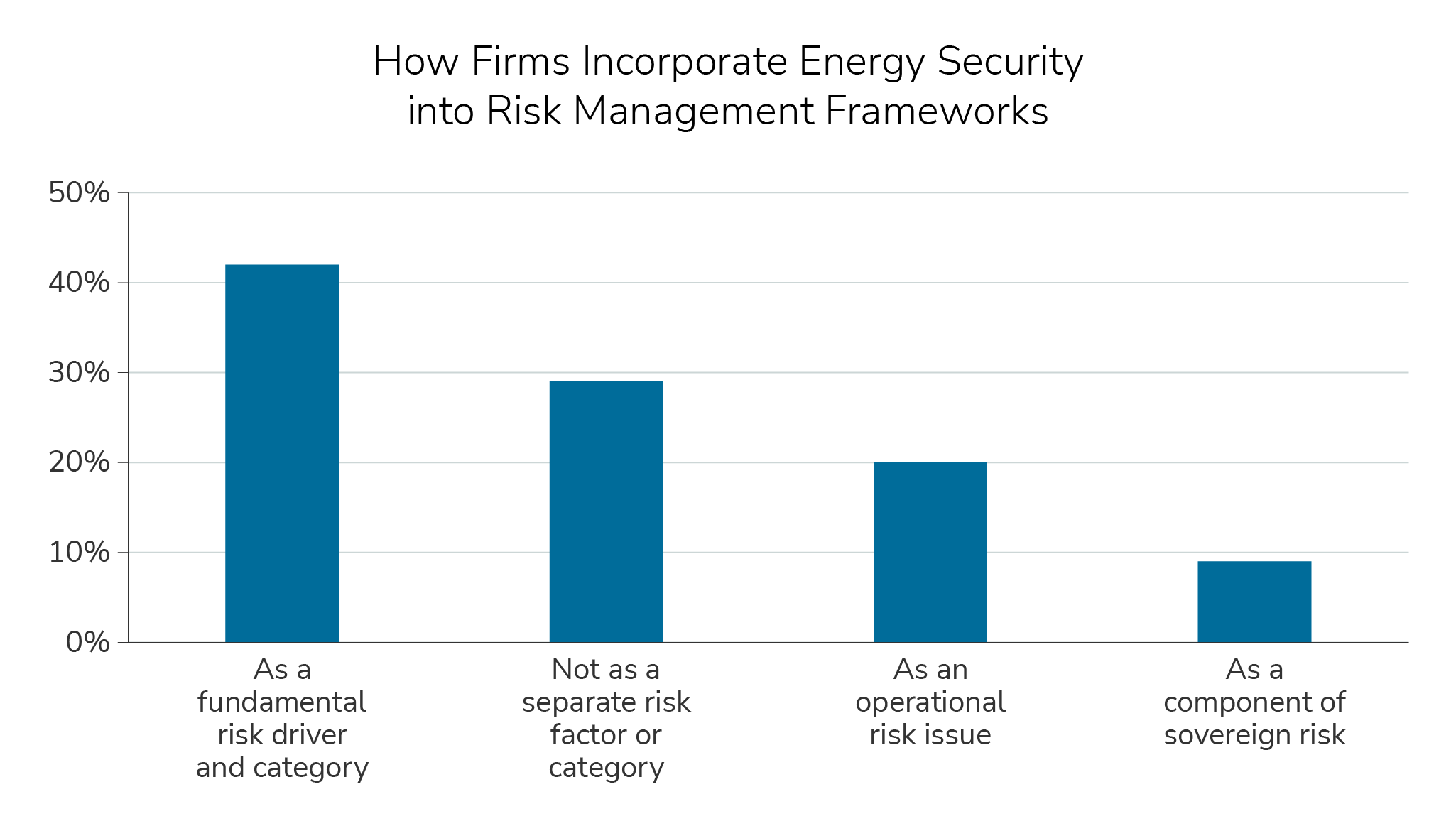
The survey results suggest energy security risk is viewed to be a serious and fundamental risk driver that manifests through traditional risk channels.
Insight #2 – Energy Security Impacts the Assessment
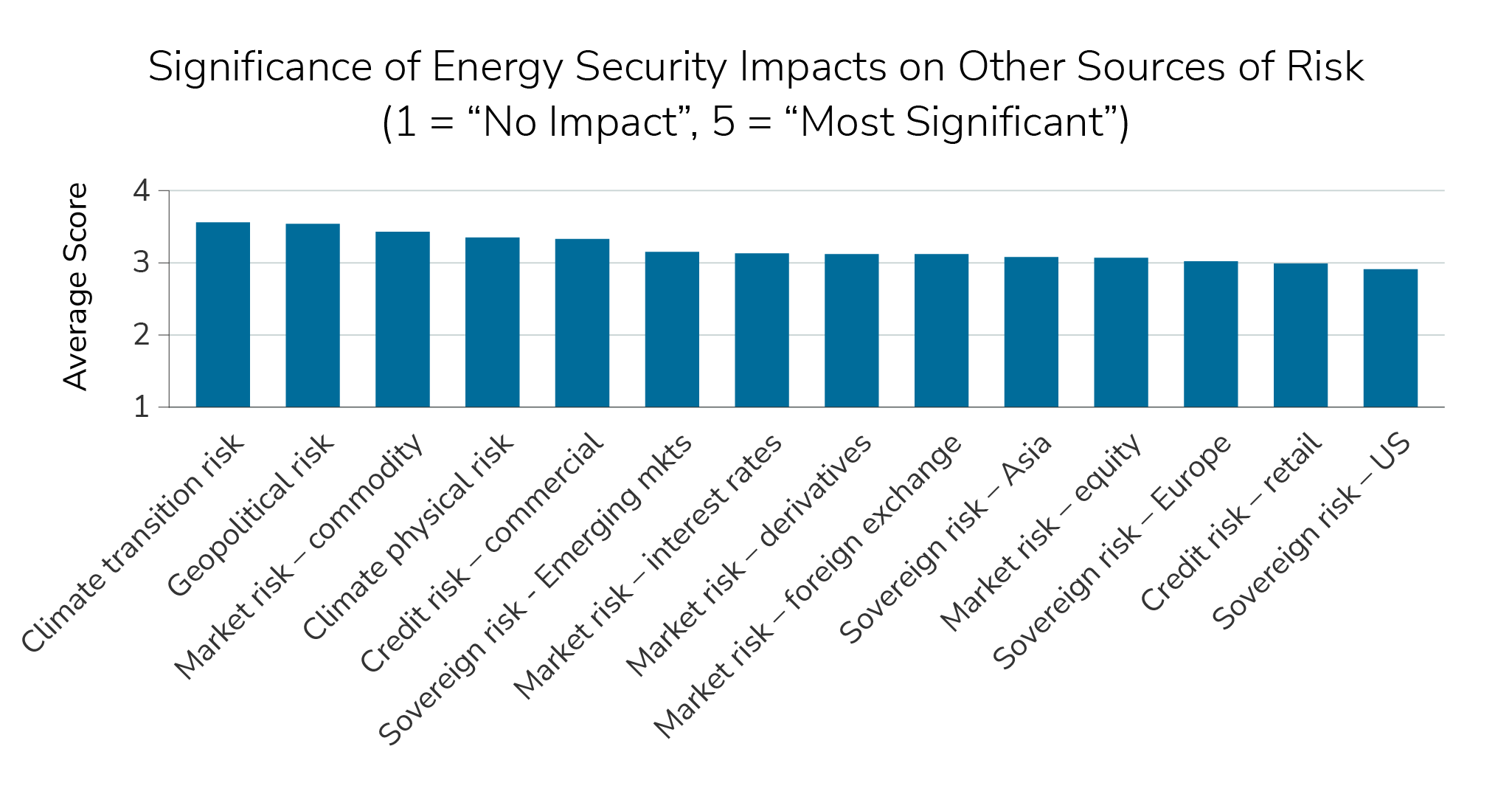
of Climate Transition and Geopolitical Risk the Most
In terms of sovereign risk, energy security was identified as having the greatest impact in emerging markets and the least impact on the US.
Commodity market risk, where many emerging market nations can have significant exposure, was also identified as an area where energy security was having a big impact.
Insight #3 – Consideration of Energy Security in Risk Processes has Increased Over the Last 3 Years
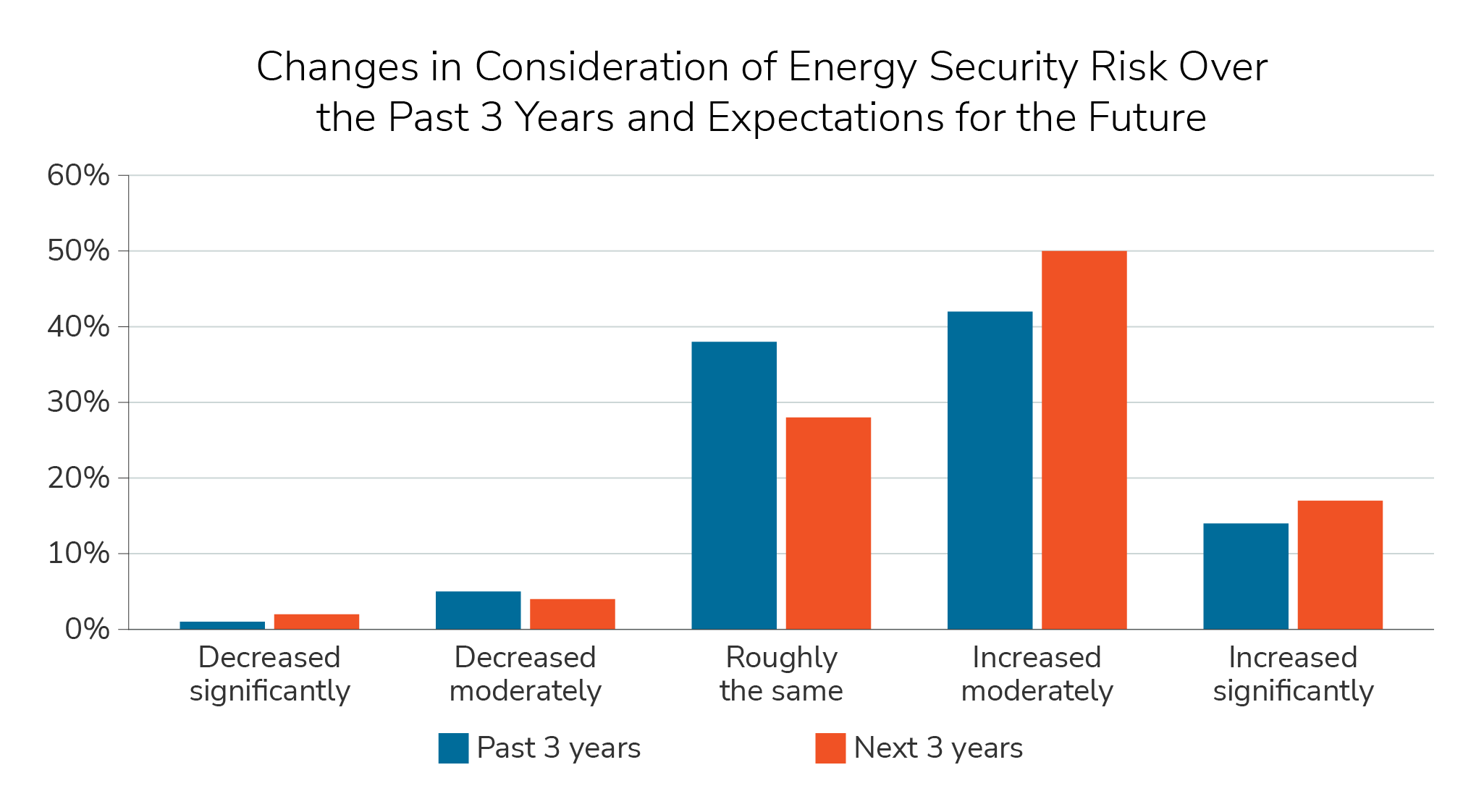
Roughly 56% of respondents reported that their firm has been more proactive in assessing energy security as a risk factor over the past 3 years and 67% expect awareness to rise further over the next 3 years.
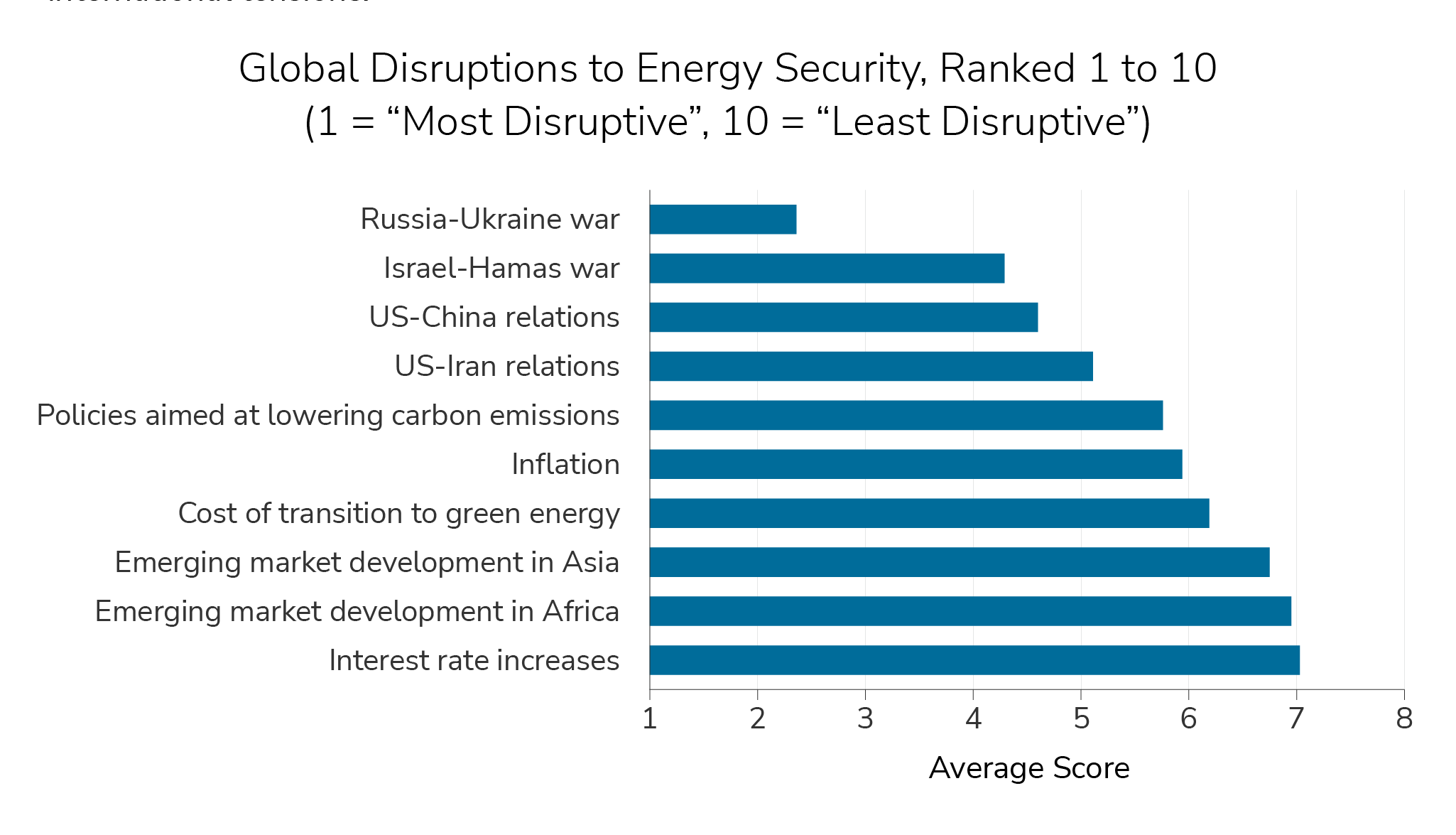
Insight #4 – Energy Security is Most Disrupted by International Conflict/Tension
Not surprisingly, the Russian invasion of Ukraine ranked highest in terms of global disruptions to energy security followed by the ongoing Israel-Hamas conflict and other international tensions.
Insight #5 – Lowering Carbon Emissions Has Been a Higher Priority Than Energy Security
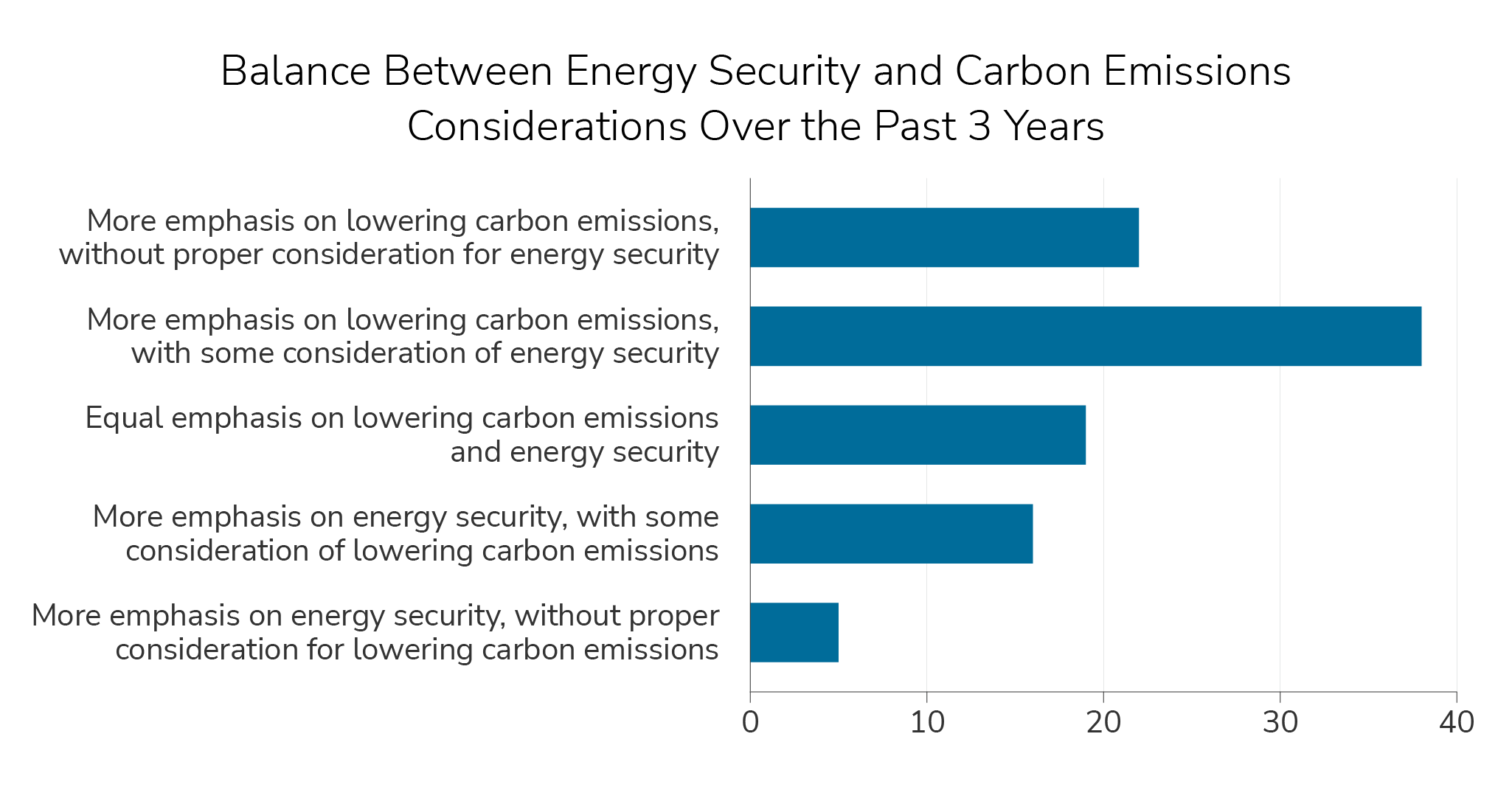
Over 60% of Respondents felt there has been more emphasis on lowering carbon emissions, including 75% from Europe, 58% from the Americas, and 54% from Asia.
Only 21% of respondents felt there has been more emphasis on energy security, including 24% from Asia, 19% from the Americas, and 11% from Europe.
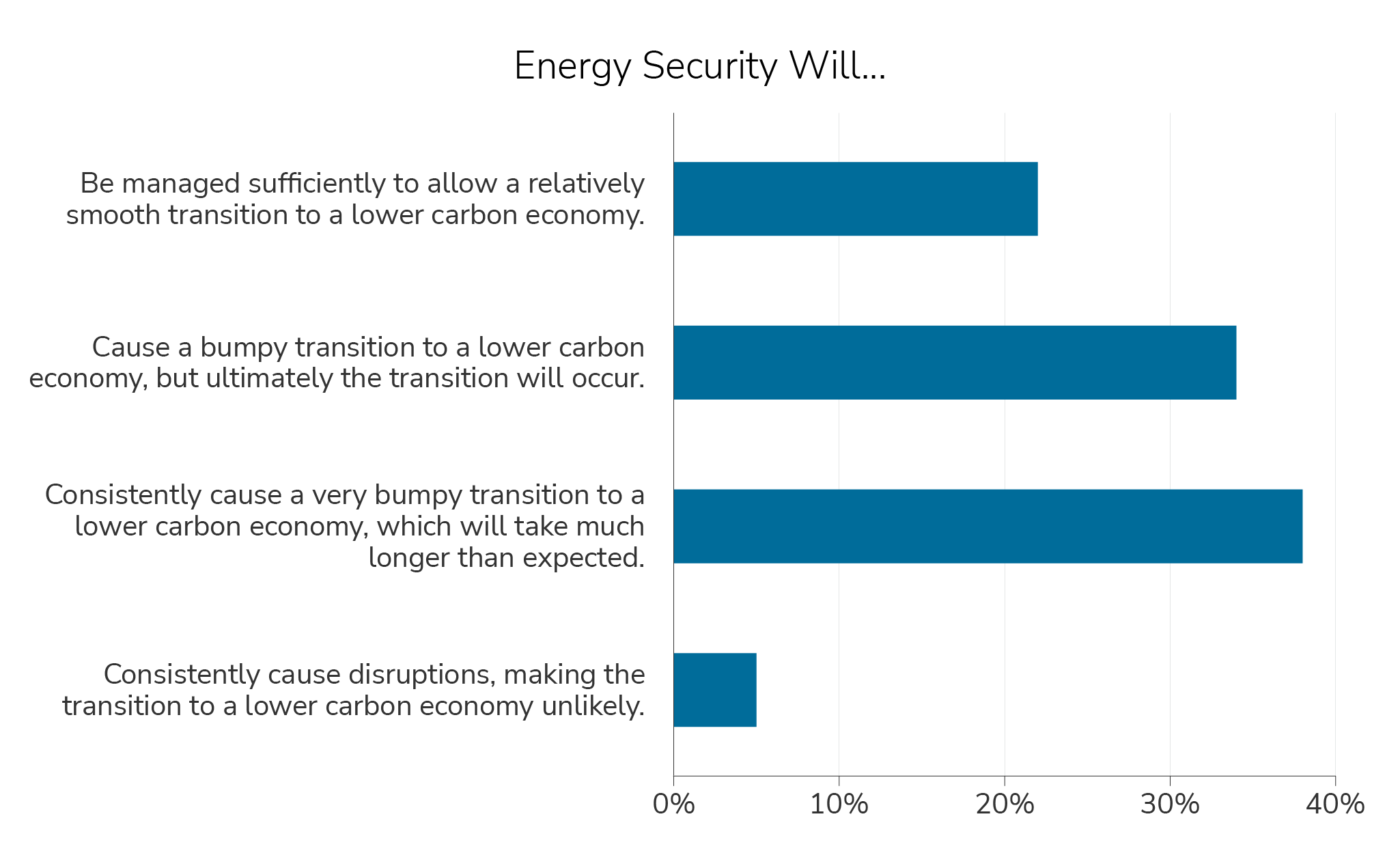
Insight #6 – Risk Managers Expect Energy Security Considerations Will Lead to a Slow, Bumpy Transition to a Lower Carbon Economy
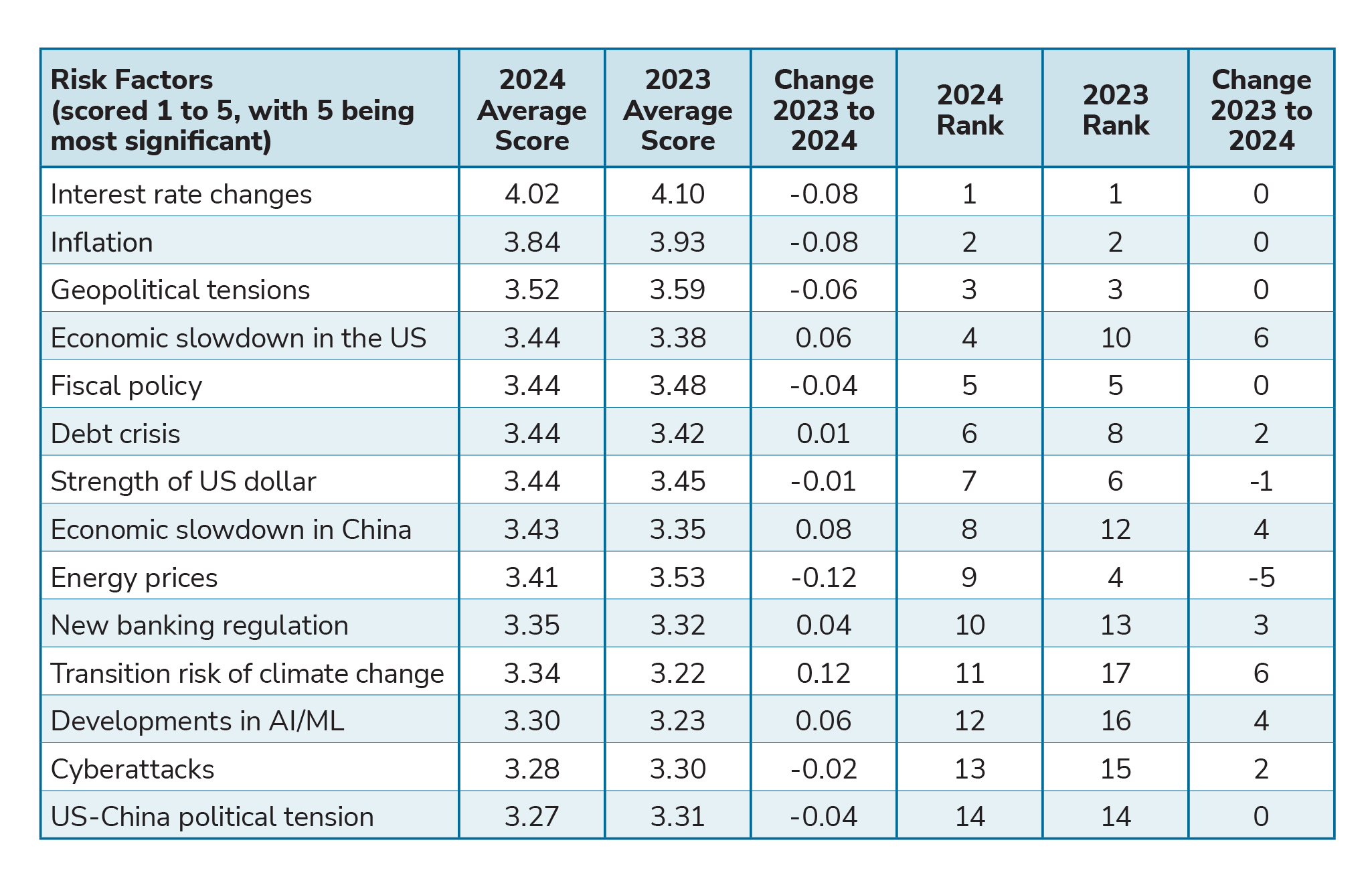
Insight #7 – Interest Rates, Inflation and Geopolitical Tensions are Expected to Remain the Most Significant Risk Factors in 2024
Interest rates, inflation, and geopolitical tensions were ranked the number 1, 2, and 3 risk factors in 2023 and are expected to remain so in 2024.
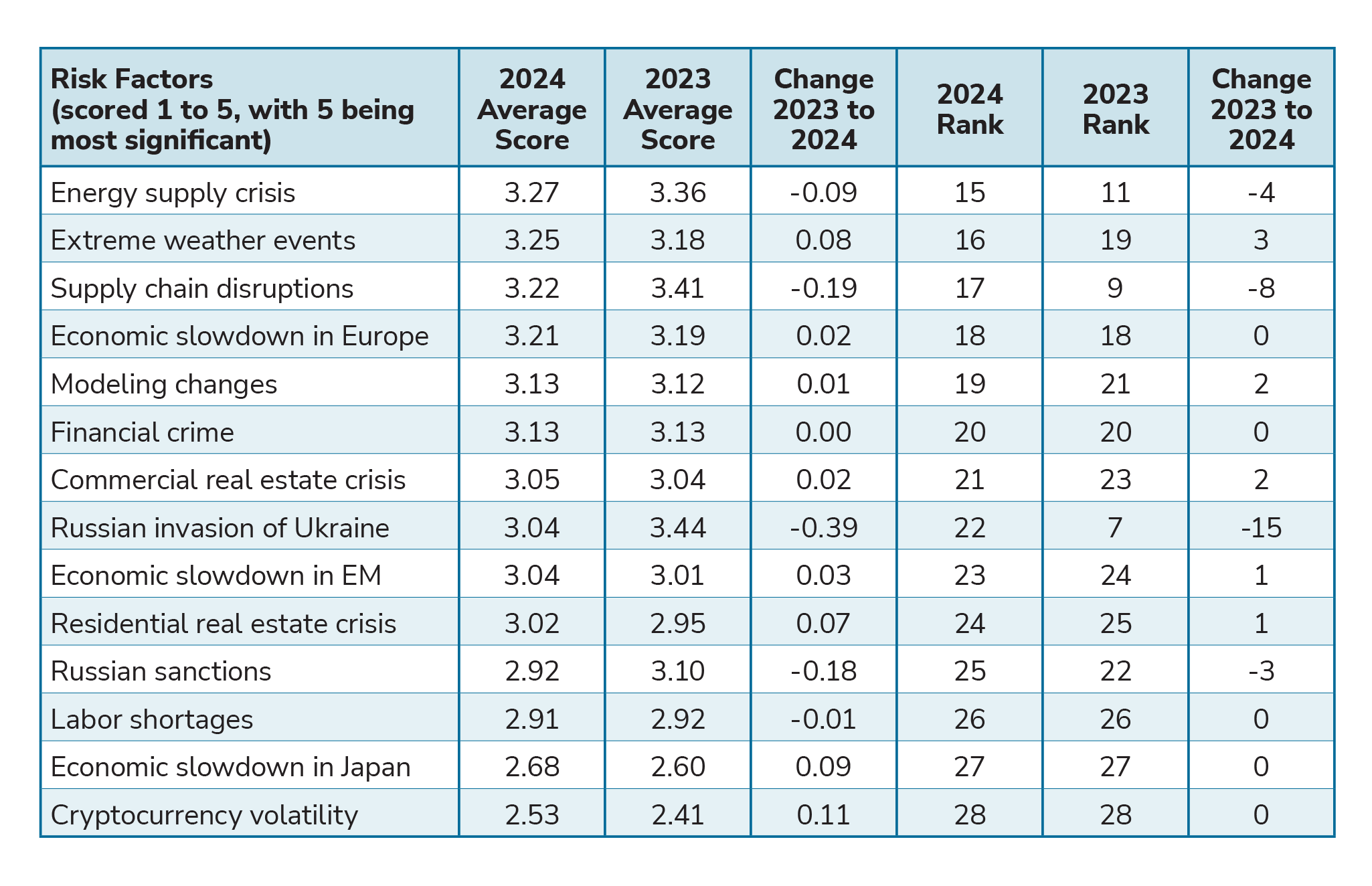
An economic slowdown in the US rose from the number 10 risk in 2023 to number 4 spot for 2024. Supply chain disruptions fell from number 9 to number 17.
Perhaps not surprisingly, the Russian invasion of Ukraine fell from the number 7 spot in 2023 to number 22 in 2024, as firms have had time to adjust expectations and forecasts.
An Economic Slowdown in China (12 to 8), New Banking Regulation (13 to 10), Climate change transition risk (17 to 11), and Developments in AI/ML (16 to 12) each saw their risk ranking move three or more spots higher for 2024.
Survey Demographics
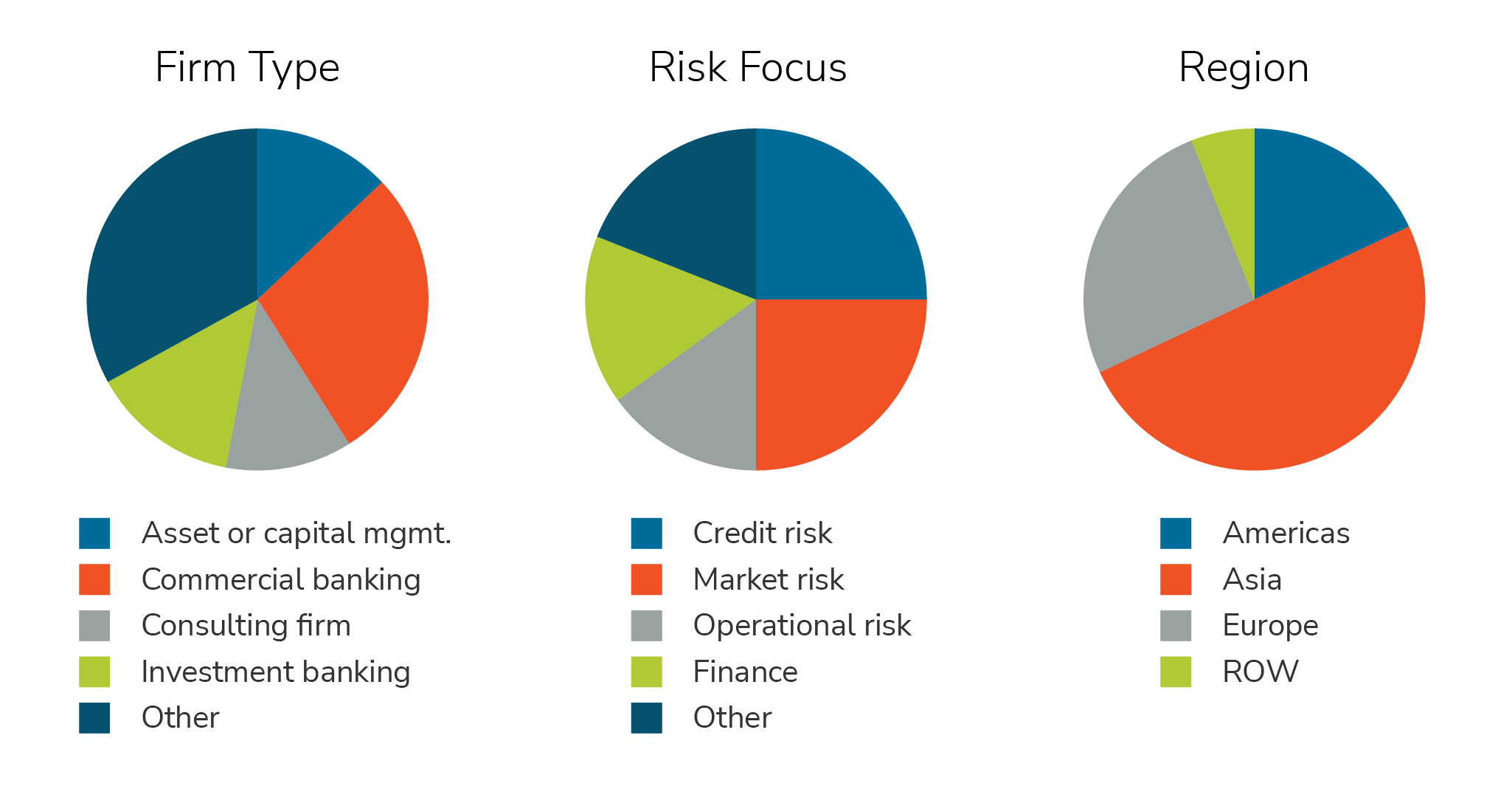
Over 400 FRM-Certified professionals participated in this survey. They represent a broad swath of financial services firms and risk disciplines across the globe as shown in the respondent breakdowns by region, firm type, and primary risk area in the charts below.