
Once a niche allocation, private credit has emerged as a cornerstone for sophisticated investors seeking differentiated yield and diversification, especially in an era marked by persistent uncertainty, shifting central bank policies, and the recalibration of risk and reward. Understanding the nuances of risk management in this asset class is not just prudent – it is essential for long-term capital preservation and value creation.
Amid the explosive growth and remarkable success of the private credit sector, firms have understandably prioritized capital deployment and innovation to meet investor demand. Yet in some cases, this rapid expansion has outpaced the development of holistic risk management frameworks.
As a result, challenges such as sector concentration, illiquidity, opaque valuations, liquidity mismatches, structural complexity, and fragmented data have emerged – not as failures, but as natural growing pains for a dynamic industry. Without the timely integration of advanced analytics, robust scenario analysis, dynamic governance, and comprehensive data practices, these issues can amplify perceived vulnerabilities and interconnectedness across financial institutions, heightening the risk that localized shocks could propagate into broader financial contagion and systemic events – concerns that increasingly draw the attention of regulators and macro market participants.
These challenges are not insurmountable; rather, they represent a pivotal opportunity for private credit leaders to invest in risk management infrastructure that matches the sophistication and scale of their investment platforms, ensuring sustainable growth and resilience for the future.
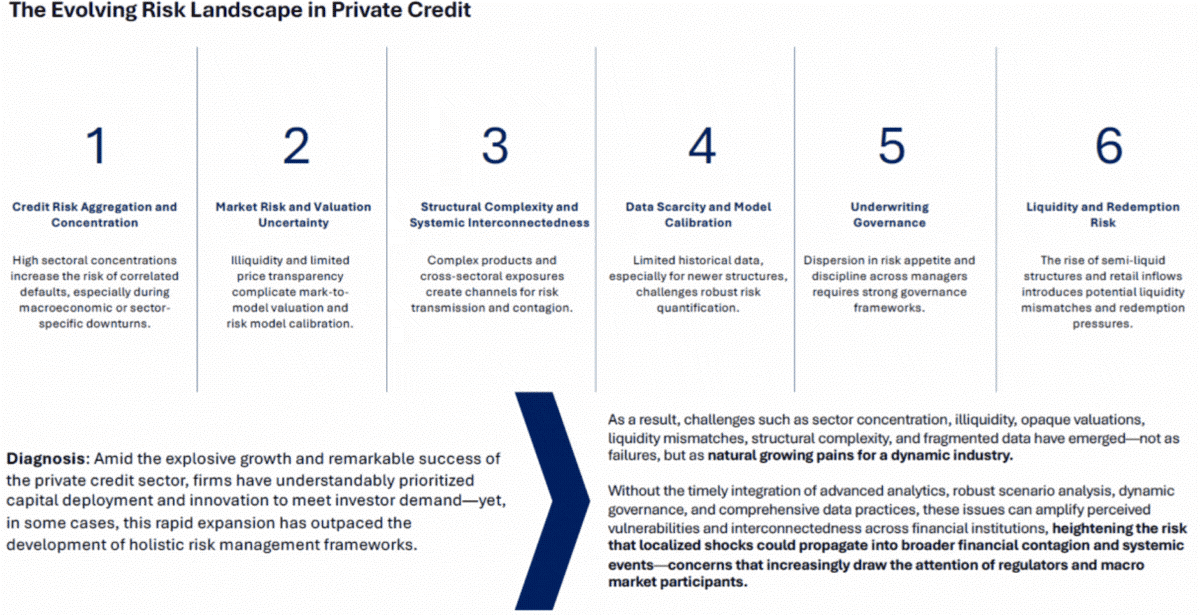
The Expanding Universe: Opportunity and Complexity
Private credit today spans a broad spectrum, from first and second lien loans to unitranche, recurring revenue loans, specialty finance, NAV lending, credit secondaries, and more. This diversity brings with it a rich tapestry of risk-return profiles but also introduces acute challenges. Sectoral allocations are heterogeneous, with concentrations in technology, healthcare, financial services, aerospace, real estate, and beyond.
While this breadth offers the promise of diversification, it also creates new complexities around risk aggregation, sectoral correlation, and exposure to tail events.
From Aggregation to Scenario Analysis
Optimizing risk in private credit portfolios demands a holistic, data-driven approach – one that integrates advanced analytics, scenario modeling, and robust governance. The era of relying on historical correlations and static models is behind us. Instead, we must recognize that diversification benefits can erode rapidly in times of stress, as correlations spike and losses become amplified. This is particularly true in high-growth sectors like technology and healthcare, where the risk of correlated defaults is elevated during downturns.
Quantitative Credit Risk Aggregation
The competitive proliferation of private credit strategies has, in some instances, led to compressed spreads and a relaxation of underwriting standards. In segments with high leverage and limited covenant protection, the risk of correlated defaults is especially pronounced.
Effective risk management here is not simply about setting exposure limits; it is about employing advanced analytics that capture obligor-level and sectoral interdependencies and running robust scenario analyses to quantify tail risks.
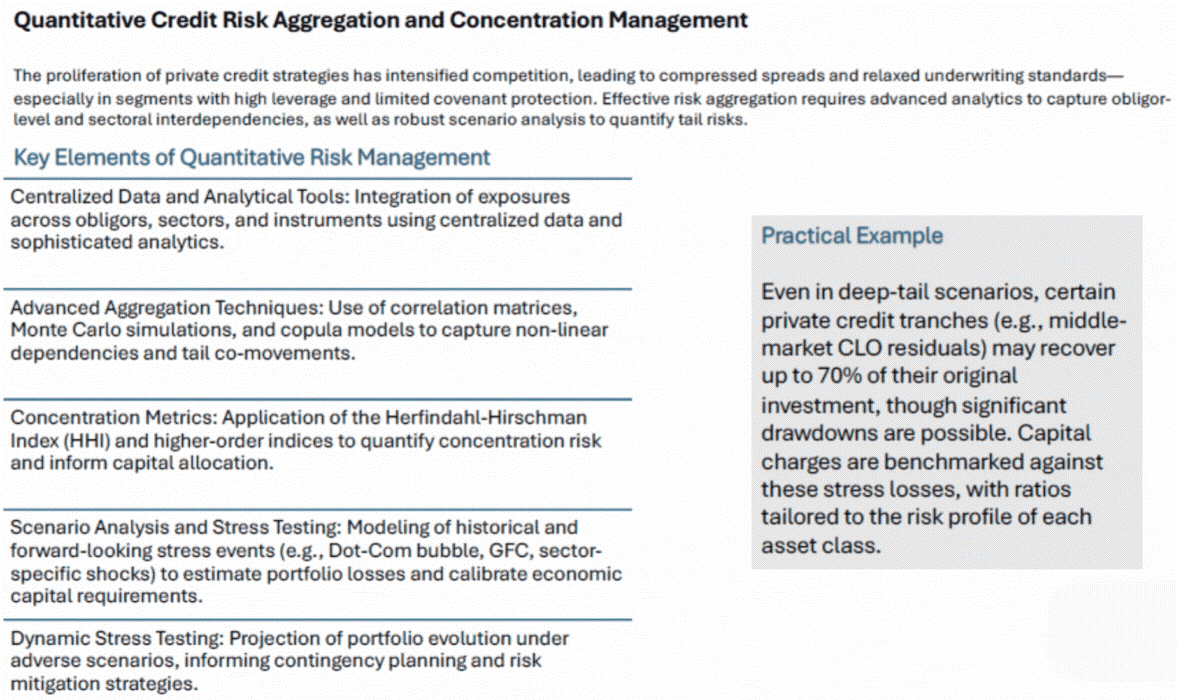
At our sophisticated sovereign wealth clients and the firms that serve them, and indeed across leading institutions, the integration of exposures across obligors, sectors, and instruments is supported by centralized data and sophisticated analytical tools. Quantitative aggregation techniques such as correlation matrices, Monte Carlo simulations, and copula models are employed to estimate the economic capital required to absorb losses from credit events, considering both idiosyncratic and systemic risk factors.
Scenario analysis is central. We must model not only historical stress events (such as the dot-com bubble or the Global Financial Crisis) but also forward-looking scenarios: sector-specific downturns, interest rate shocks, and liquidity freezes. For each scenario, portfolio losses are estimated using industry-standard parameters – Probability of Default (PD), Loss Given Default (LGD), and Exposure at Default (EAD). Economic capital is then calibrated to cover losses at a high confidence level, capturing both expected and unexpected losses under stress.
The Illiquidity Premium and Its Costs
Private credit assets are, by their nature, illiquid and often lack observable market prices. This opacity complicates mark-to-model valuation, particularly during periods of market stress when bid-ask spreads widen and transaction volumes drop. The absence of price discovery mechanisms can lead to discrepancies between private valuations and public market marks, especially in distressed scenarios.
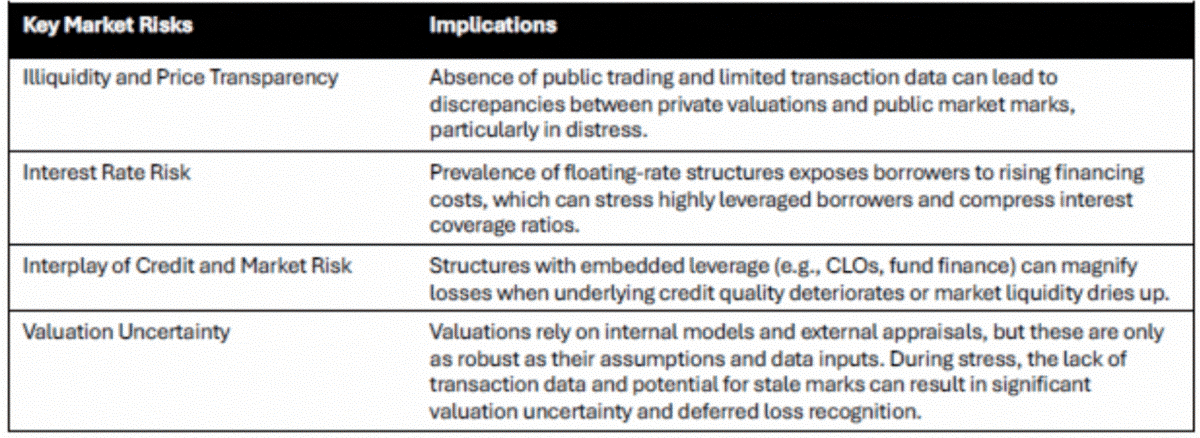
Most private credit instruments are structured with floating rates, exposing borrowers to rising financing costs in a higher-rate environment. For highly leveraged borrowers, this can compress interest coverage ratios and increase the risk of distress.
The interplay between credit risk and market risk is further amplified in structures with embedded leverage, such as CLOs and fund finance vehicles.
Valuations in private credit rely on internal models and external appraisals, but these are only as robust as their underlying assumptions and data inputs. During stress, the lack of transaction data and the potential for stale marks can result in significant valuation uncertainty, and delayed loss recognition can lead to deferred realization of losses followed by a spike in defaults and dramatic markdowns.
The Challenge of Semi-Liquid Structures
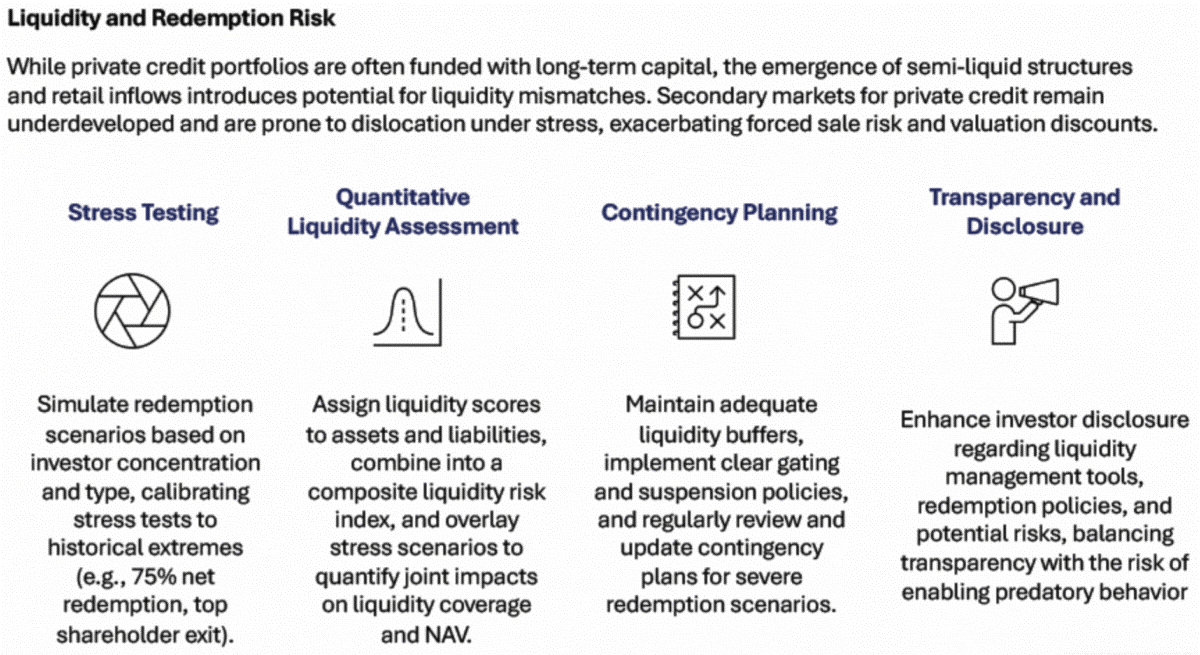
Historically, private credit funds operated as closed-end vehicles, locking in investor capital and minimizing liquidity risk. However, the rise of semi-liquid and hybrid structures – including perpetual non-traded BDCs and interval funds – has fundamentally altered the liquidity profile of the sector. These vehicles, designed to appeal to a broader investor base, offer periodic redemption windows. Yet, these mechanisms have not been fully tested in severe market stress.
In periods of heightened volatility or deteriorating performance, redemption requests can rapidly exceed available liquidity, forcing managers to sell illiquid assets at a discount or suspend redemptions altogether. The collapse of the Woodford Equity Income Fund is a cautionary tale of how concentrated illiquid holdings combined with rising redemptions can precipitate a fund’s failure.
Robust liquidity risk management requires quantitative stress testing frameworks that simulate both liability shocks (redemptions or margin calls) and asset shocks (market dislocation, widening bid-ask spreads). Effective approaches include simulating redemption scenarios based on investor concentration and type, calibrating stress tests to historical extremes, and assessing the impact of combined asset and liability shocks using multicriteria scoring.
Structural Complexity and Systemic Interconnectedness
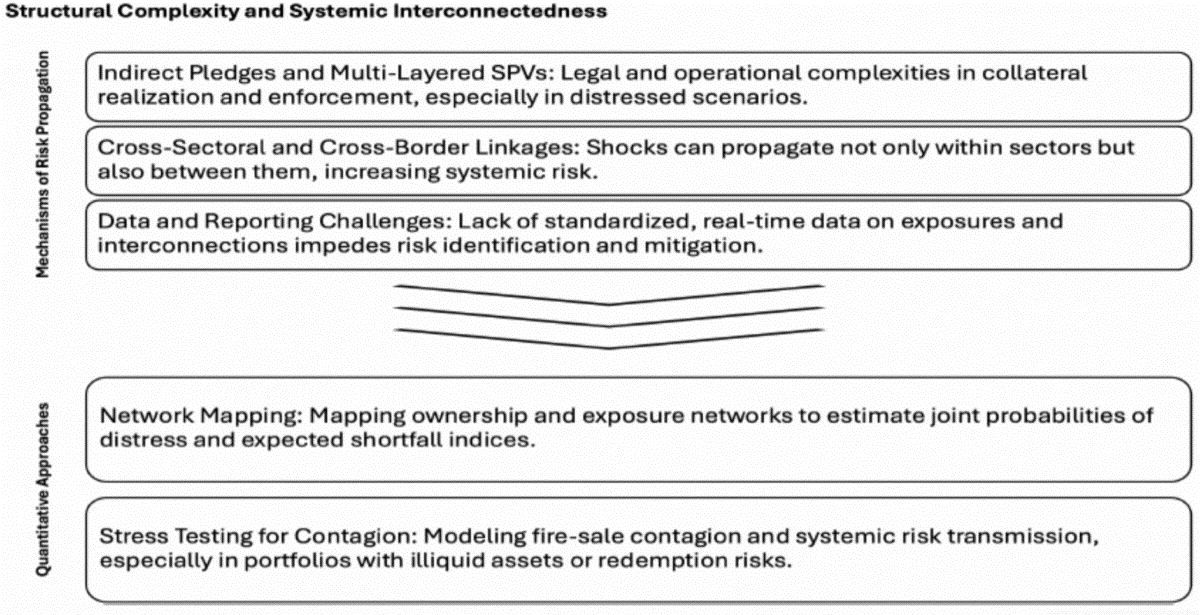
Modern portfolio structures increasingly rely on intricate legal and financial arrangements – indirect pledges in NAV secondaries, multi-layered SPVs in fund finance, and more. These structures, while innovative, introduce new channels for risk transmission across asset classes and sectors. The lack of standardized reporting and regulatory oversight further impedes real-time risk identification and mitigation.
Interconnectedness in financial networks means that distress in one entity or asset pool can quickly transmit to others, especially when exposures are concentrated or when central nodes in the network are affected. Mapping these interlinkages is essential for understanding potential contagion pathways and for effective systemic risk management.
Data Scarcity and Model Calibration: Bridging the Gaps
The heterogeneity of private credit exposures, coupled with limited historical default data – especially for newer or bespoke structures – poses significant challenges for model calibration and validation. Here, leveraging external benchmarks, scenario-based analytics, and expert judgment are critical to ensure robust model calibration and validation.
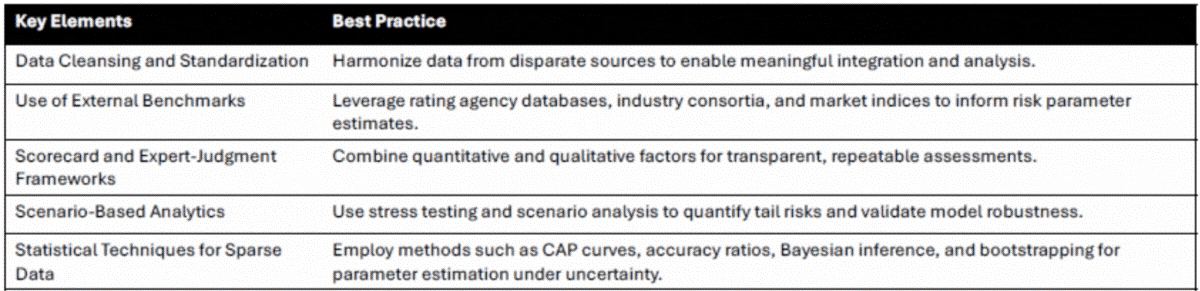
Leading institutions are investing in comprehensive data strategies: cleansing and standardizing data from disparate sources, integrating internal and external datasets, and employing advanced analytics to facilitate scenario analysis and forward-looking risk assessment – even in the face of incomplete historical data.
Underwriting Governance: Discipline Amid Dispersion
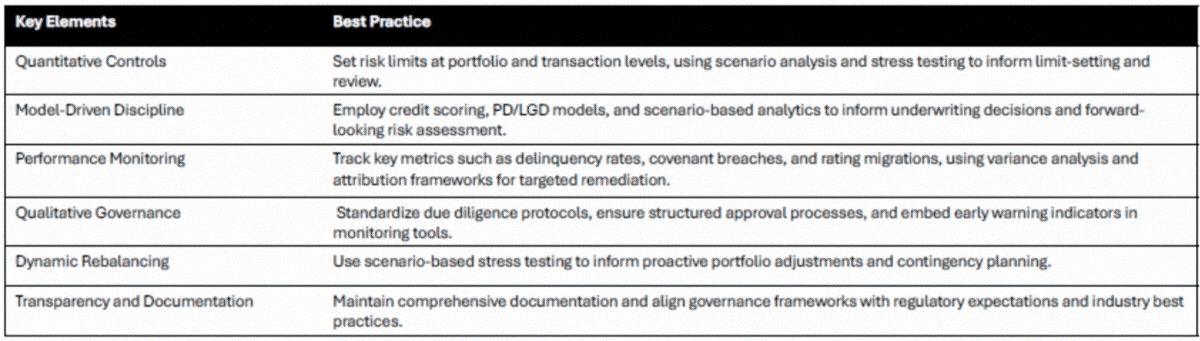
Underwriting and ongoing due diligence are paramount, given the dispersion in risk appetite, underwriting discipline, and performance across private credit managers. Effective underwriting governance frameworks must monitor adherence to risk limits, ensure alignment with portfolio objectives, and facilitate dynamic rebalancing in response to evolving market conditions.
Quantitative risk limits at both portfolio and transaction levels – sector, obligor, and rating-level concentration limits, maximum single exposure thresholds, and minimum credit enhancement requirements – are set using historical loss data, scenario analysis, and stress testing. These are reviewed at least quarterly to ensure ongoing relevance as market conditions evolve.
Qualitative governance is equally important: Structured approval and escalation processes, comprehensive due diligence standards, and ongoing covenant and portfolio surveillance are all critical. Early warning indicators such as financial covenant headroom, sponsor support, and macroeconomic triggers are embedded in monitoring tools to facilitate proactive intervention.
The Art and Science of Private Credit - Risk Management
Private credit offers compelling opportunities for enhanced risk-adjusted returns and portfolio diversification. However, the complexity and heterogeneity of exposures demand a rigorous, multidimensional approach to risk management. Integrating advanced quantitative analytics with robust qualitative governance is essential for managing concentration, correlation, illiquidity, and systemic risks.
Empirical evidence suggests that, when managed within a robust risk framework, private credit can materially improve a portfolio’s overall risk-adjusted return, particularly when allocations are diversified across strategies and sectors. But the asset class also contributes meaningfully to tail risk, reinforcing the need for prudent exposure limits, ongoing performance monitoring, and adaptive capital planning.
In this evolving landscape, the art and science of private credit portfolio construction lies in balancing the pursuit of superior returns with the discipline of comprehensive risk management. Institutions that invest in advanced analytics, adaptive governance, and transparent communication will be best positioned to navigate the evolving landscape, capitalize on the asset class’s structural advantages, and deliver resilient, long-term value to stakeholders.
We urge market participants to remain vigilant to the secular changes underway – guarding against the temptation to reframe or deny new realities, and instead embracing a mindset of adaptive risk management, continuous learning, and disciplined execution. In private credit, as in all investment domains, the greatest opportunities often accrue to those who combine vision with vigilance, and innovation with prudence.
Medy Agami is a Senior Partner, and Karen Cohen is a Partner, at Ben-Roz. They can be reached at medy.agami@ben-roz.com and karen.cohen@ben-roz.com.