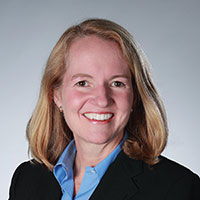
Rosengren calls for wider use of stress tests

Friday, June 29, 2012

print Print | Order | Email this Story |

By Ira Kantor, Boston Herald

June 29--While the focus on stress tests has grown in the financial world, they need to be utilized better in financial structures designed to be "capital efficient," and in the behavior and resilience of broker-dealer arrangements during times of financial crisis, Federal Reserve Bank of Boston President Eric Rosengren said today.

Rosengren, speaking at a Conference on Post-Crisis Banking in the Netherlands, said stress tests could help financial institutions pay more attention to undercapitalized structures rather than the capital needed strictly to satisfy regulatory requirements.

"By using stress tests to identify the possible capital and liquidity demands from these structures during a crisis, the institution's management, board of directors, and regulators can better determine the appropriateness of the structures and the associated capital and liquidity -- and whether these structures are likely to be beneficial to the organization at all times, or only during good times," he said.

The Boston Fed president also addressed U.S. Securities and Exchange Commission reform proposals targeting several measures designed to reduce the risk of stresses during times of financial market crisis, saying he was "very supportive" of the reforms.

"As the primary regulator of money funds, the SEC is in a position to adopt rules that would address the vulnerabilities of those funds more comprehensively, effectively and efficiently than other approaches," he said. "However, at this time it is unclear what the final proposal will be, or whether the SEC's final proposal will be adopted."

Rosengren added his tests would "make clear that money market mutual funds with well capitalized sponsors are likely to be less risky than those that do not have well capitalized sponsors."

Rosengren also emphasized that one way to assess the increased market sensitivity of bank holding companies could be to model in stress tests how a sudden liquidity shortage might impact broker-dealer operations.

"While the role of depositories and their susceptibility to runs has received much attention, I believe more work needs to be done on the implications of potential crisis-related stresses at broker-dealers that do not have access to liquidity facilities," he said.

ira.kantor@bostonherald.com

___

(c)2012 the Boston Herald

Visit the Boston Herald at www.bostonherald.com

Distributed by MCT Information Services

A service of YellowBrix, Inc.


Risk Management e-Journal
cover
The Risk Management e-Journal publishes paper abstracts on the topics that matter most to risk professionals. See what your risk manager colleagues are reading about today.


Get Free Updates on the Dodd-Frank Act
DoddFrank
Register for Morrison & Foerster's FrankNDodd service to receive Daily News Alerts on the Dodd-Frank Act, gain access to regulatory highlights and commentary, and use the exclusive FrankNDodd Tracker tool.


Banner Picture