The late, great Warren Zevon sang about werewolves living it up
in his sardonic 1978 classic
"Werewolves of London." It seems there may be more metaphorical
truth to this song than meets the eye.
In his recently published book,
The Hour Between Dog and Wolf: Risk Taking, Gut Feelings and the
Biology of Boom and Bust (Penguin Press), John Coates
brilliantly explains how physiological reactions to success,
stress, threat and opportunity may be at the heart of the excesses
that accompany, and can even define, the tail ends of financial
peaks and troughs. A former Wall Street trader, Coates has some
fascinating ideas for how a working understanding of this
intersection of neuroscience and finance could benefit the risk
management of investment banks, as well as the health of the risk
takers themselves.
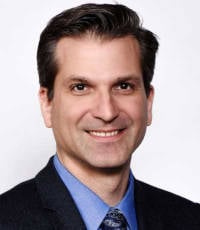
 |
Former Wall Street trader
John Coates' new book
focuses on the intersection
of neuroscience and finance. |
The book itself contains a large amount of hard science,
centering on the body's unconscious reactions to change in the
immediate environment and how that in turn, via the natural
production of hormones and steroids, dictates the conscious
reaction to the situation. It also shows, as a working example, how
this plays out on a trading floor, where such reactions can have an
impact on both the health of the firm in question, and within the
overall financial system.
I Saw a Werewolf Drinking a PiƱa Colada at Trader
Vic's
The results of various experiments make for truly interesting
reading, with daily P&Ls being positively correlated to
startling testosterone levels, but, for risk management, the
further increase in testosterone that the very success generates,
and the subsequent increasing tolerance for risky behavior that
follows it. The book describes the euphoric rush at the peak of a
successful trading day in a bull market, as a "point that traders
and investors feel the bonds of terrestrial life slip from their
shoulders and they begin to flex their muscles like newborn
superheroes."
This observed behavior is counterpointed by the economic theory
typically employed in the same banks, which assumes rational
behavior from market participants, and begins to highlight where
the two views diverge, creating the volatility and exuberance seen
at the height of a boom. Moving easily between neuroscience,
philosophy, pop culture and financial market behavior, Coates
highlights differences between the ideal (rational) and the actual
(potentially irrational) trading behaviors.
Equally important is the bodily reaction to underperformance and
its ability to dictate a highly risk-averse state of mind. Again
moving through the subconscious to the resultant conscious
reaction, it illuminates the situation at the bottom of a bad day,
and how body can initiate instinctual reactions to stress, leading
at the extreme to an inability to act at all.
He's the Hairy-Handed Gent Who Ran Amok in Kent
The book concludes with a number of ways that such knowledge
could be used to strengthen risk management, from hiring policy
through active trading-floor risk management. The key lies between
two core elements: the testosterone levels of the trader; and the
trader's ability to deal with spiking levels of uncertainty.
The first point would seem to indicate that when bringing
together a cluster of younger (less experienced in dealing with
stressful conditions) men (higher testosterone), and spiking that
cocktail with an environment of monetary and cultural reward,
short-term performance is likely to increase the severity of tail
events. A more diverse mix of gender and age is likely to dilute
this significantly. It is also important to recognize and intercept
extreme physiological responses, and suggestions include both
longer-term incentive schemes and a more pastoral management of
success and failure through the cycle.
These are excellent ideas, but it is also important to employ a
risk monitoring system that tracks individual traders' successes
and failures, including higher and lower P&Ls on specific
positions and trades, which would logically seem to be early
indicators of their subconscious drivers.
All in all, Coates's book is a must read for risk managers who
would like to progress their firm's risk culture beyond end-of-day
reporting.
Marcus
Cree (Twitter: @marcuscreerisk) is vice president of risk
solutions, in charge of client solutions for North America for
SunGard's capital markets business, based in New York. At SunGard,
Cree has worked in the implementation team for the Adaptiv risk
solution as well as the solutions team in Europe. Before joining
SunGard, he worked in the risk control unit of Deutsche Bank, the
implementation team of Misys, and as an analyst for a U.K.-based
stockbroker. In addition to the GARP FRM and AIMR qualifications,
Mr. Cree holds a degree in mathematics and psychology from
Leicester University.